Enterprise software initiatives create risk when leadership must approve deployment, vendor acceptance, funding continuation, or production release without an independent view of quality, requirements alignment, security exposure, and operational readiness.
Independent Validation and Verification, or IV&V, gives technology leaders an objective view of whether software is being built correctly, whether it supports the intended business need, and where unresolved issues create delivery, compliance, security, or operational risk.
i3solutions provides IV&V services for Microsoft-centric and enterprise software environments where quality, governance, integration, documentation, vendor accountability, and production readiness matter. Our teams review requirements, architecture, code quality, testing evidence, security considerations, integration dependencies, user workflows, deployment readiness, and supportability before leaders make high-impact decisions.
The goal is not to add another testing checkpoint. The goal is to give executives, IT leaders, program owners, and delivery teams evidence they can use to approve, correct, pause, remediate, or redirect software initiatives before risk becomes harder to contain.
Software approval decisions should not depend only on vendor status reports, internal optimism, or late-stage testing. i3solutions provides independent review of quality, requirements alignment, technical risk, security considerations, and readiness so leaders understand what is ready, what requires remediation, and what should not move forward yet.
Software initiatives rarely break down because no one tested the system. They break down when validation happens too late, findings lack independence, requirements are unclear, security and compliance concerns are deferred, or leadership receives status reporting that does not reflect operational risk.
These issues become more serious when software supports regulated data, Microsoft platform integrations, custom workflows, vendor-delivered applications, mission-critical processes, or executive-facing transformation programs. By the time defects appear in production, the organization is already absorbing cost, disruption, and reputational exposure.
Many programs rely on end-stage testing to confirm readiness. By then, design flaws, missed requirements, weak architecture, and workflow gaps are expensive to correct. IV&V surfaces issues earlier, when leaders still have practical options for remediation, sequencing, or scope control.
Vendor-delivered systems often move through milestones based on progress reports, demos, or test summaries created by the same team responsible for delivery. That does not make the information wrong, but it does limit objectivity. IV&V creates an independent signal leadership can use when evaluating acceptance, payment, remediation, or release decisions.
A system can satisfy documented requirements and still fail the users, workflows, integrations, or support model it was intended to serve. Effective IV&V tests both sides of the decision: whether the system matches the specification and whether the specification reflects the business outcome.
Security, privacy, accessibility, records, auditability, and compliance considerations create risk when they are addressed only before deployment. IV&V evaluates whether these concerns are visible throughout requirements, design, development, testing, and release planning.
Defect counts alone do not tell leadership whether a system is ready. One unresolved integration issue, access-control gap, data defect, or workflow failure can create more risk than a long list of cosmetic findings. IV&V translates technical findings into decision-ready risk context.
A passed test cycle does not automatically prove the system is ready for production. Deployment planning, rollback paths, monitoring, documentation, support ownership, user readiness, and integration stability all affect whether software can operate reliably after release.
Independent Validation and Verification is often reduced to testing, code review, or compliance checking. At the enterprise level, it is broader. IV&V gives leadership an independent view of software quality, delivery risk, operational readiness, and alignment between the system being built and the outcome the organization needs.

IV&V must operate outside the delivery team’s incentives. The value comes from objective evaluation, not from defending a schedule, protecting a vendor relationship, or confirming a preferred outcome. Findings need to remain clear, evidence-based, and useful for leadership decisions.
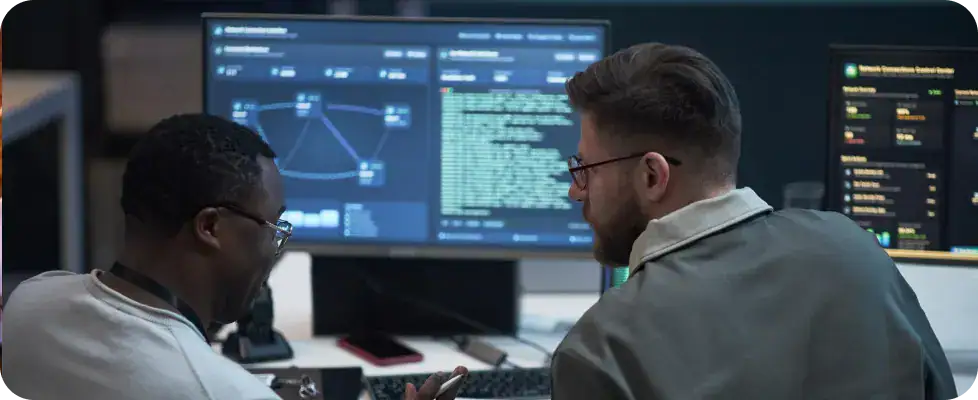
Enterprise validation requires a clear line from business need to requirements, architecture, implementation, test evidence, deployment planning, and support readiness. Weak traceability leaves teams unable to prove whether the delivered system reflects the approved scope.

Software issues matter because of what they do to operations. IV&V needs to evaluate code quality, integrations, data behavior, security, performance, usability, and supportability in the context of how the system is expected to operate.

The output of IV&V should not be a defect list alone. Leadership needs concise findings, severity, evidence, business impact, remediation options, and acceptance risk. The review must support decisions, not simply document observations.

Independent Validation and Verification is most valuable when leadership needs objective evidence before approving a release, continuing investment, accepting vendor work, or escalating a delivery concern. These situations are not always signs of failure. They are often signs that the initiative is important enough to require a defensible view of readiness and risk.
When a vendor says the system is ready, internal leaders still need confidence that requirements were met, defects are understood, integrations behave as expected, and unresolved issues do not create downstream risk. IV&V gives leadership an independent basis for acceptance, remediation, or continued negotiation.
Programs often drift before they fail. Missed milestones, changing scope, defect backlogs, unclear requirements, or repeated testing delays signal that leadership needs more than status reports. IV&V identifies whether the issue is technical, managerial, architectural, requirements-related, or operational.
Business users, IT teams, vendors, QA resources, and executives may all see the same system differently. IV&V creates a neutral assessment of what is working, what is unresolved, and what decisions still need to be made before deployment or expansion.
When software supports regulated workflows, sensitive data, records, reporting, approvals, or external obligations, readiness requires more than functional testing. IV&V evaluates whether the system aligns with compliance expectations, security requirements, documentation standards, and operational evidence needs.
Replacing legacy software, workflows, portals, forms, reporting systems, or custom applications often creates hidden risk. IV&V gives leaders a structured way to validate whether the new solution supports the intended business process before retiring or reducing reliance on the old system.
Some decisions require more than confidence from the delivery team. Before launch, funding continuation, production release, contract acceptance, or executive approval, IV&V provides evidence leadership can use to defend the path forward.

Independent Validation and Verification is not a statement that the internal team failed or the vendor performed poorly. In enterprise software delivery, complexity alone creates risk. Requirements change. Integrations behave differently in production-like conditions. Security, compliance, data, workflow, and support expectations become clearer as the system moves closer to release.
IV&V gives leadership an objective way to separate normal delivery friction from material risk. It protects internal teams by clarifying what needs attention before issues become political. It also creates a fair review structure for vendors by tying findings to evidence, requirements, readiness criteria, and operational impact.
The best IV&V engagements reduce ambiguity. They do not assign blame. They give sponsors, delivery teams, vendors, and stakeholders a shared view of what is ready, what is unresolved, and what decisions need to be made before the organization moves forward.
This is especially useful when software supports regulated processes, executive-visible initiatives, vendor contracts, mission-critical workflows, or high-risk modernization. In those environments, independent review is not a sign of distrust. It is a governance mechanism for protecting the decision.
i3solutions provides IV&V services across custom applications, Microsoft-centric systems, vendor-delivered platforms, workflow applications, integrations, reporting systems, and enterprise software programs. Each engagement is structured around the decision leadership needs to make, including whether to accept, release, remediate, pause, or continue investment in the software initiative.
i3solutions reviews whether the software meets functional, technical, performance, usability, accessibility, security, and supportability expectations. This includes review of test evidence, defect patterns, architecture concerns, user workflow behavior, and production readiness indicators.
Requirements create risk when they are incomplete, inconsistent, outdated, or disconnected from user workflows. i3solutions evaluates whether requirements are clear, testable, traceable, and aligned with the business outcome the system is intended to support.
Verification focuses on whether the software was built according to approved requirements and technical expectations. i3solutions reviews implementation evidence, design alignment, code-level considerations, integration behavior, test coverage, and defect resolution quality
Validation focuses on whether the system supports the real operating need. i3solutions evaluates user workflows, decision paths, exception handling, data behavior, usability, and business process fit so leadership understands whether the software is useful beyond passing technical checks.
Vendor-delivered applications require independent oversight when acceptance, payment, scope control, or release decisions carry risk. i3solutions reviews vendor deliverables, test evidence, architecture assumptions, remediation claims, integration readiness, and deployment risk.
Code review is most useful when connected to maintainability, security, performance, extensibility, and support burden. i3solutions evaluates code quality and technical structure where source access, project scope, and review objectives support the IV&V decision.
i3solutions reviews whether software aligns with applicable governance, security, privacy, accessibility, documentation, and audit expectations. The review is scoped to the organization’s stated requirements and operating environment rather than generic compliance claims.
When IV&V identifies material issues, leadership needs more than findings. i3solutions organizes risks by severity, business impact, remediation priority, dependency, and decision consequence so teams understand what must be addressed before acceptance or release.
The difference between validation and verification matters because software can pass one and fail the other. Verification asks whether the system was built according to the approved specification. Validation asks whether the system solves the intended business problem in the operating environment where it must run.
Verification evaluates whether the system matches the approved requirements, specifications, standards, and documentation.
Checklist:
Validation evaluates whether the software supports the real business need, user workflow, operational context, and intended outcome.
Checklist:
A technically compliant system that fails the operating need still creates business risk. A useful system that lacks technical rigor creates support, security, and scalability risk. IV&V gives leaders visibility into both dimensions before acceptance or deployment.
i3solutions structures IV&V around the decision at hand. Some engagements focus on vendor acceptance. Others evaluate production readiness, technical risk, compliance evidence, code quality, requirements traceability, or remediation progress. The review path is defined by risk, not by a generic checklist.
The engagement begins by defining the decision leadership needs to support. This includes acceptance, release, remediation, vendor accountability, funding continuation, architecture review, or production readiness. Clear decision context keeps the review focused on material risk.
i3solutions reviews available project artifacts, including requirements, design documentation, architecture diagrams, test plans, test results, defect logs, release plans, security documentation, code repositories, user stories, workflow diagrams, and vendor deliverables.
The team evaluates whether requirements are complete, testable, traceable, and aligned to business outcomes. Gaps are assessed based on operational consequence, not only documentation quality.

i3solutions reviews the software against the scoped IV&V objectives. Depending on the engagement, this includes architecture, code quality, functional behavior, integrations, data handling, performance, security considerations, workflow behavior, usability, and deployment readiness.

Findings are organized around severity, evidence, impact, decision consequence, and remediation path. Leadership receives a practical view of what is acceptable, what requires correction, and what creates unacceptable risk.

The engagement produces decision-ready documentation for executive sponsors, IT leaders, program teams, vendors, and governance stakeholders. When needed, i3solutions supports follow-up validation after remediation to confirm that material issues were addressed.
IV&V gives leadership a defensible way to evaluate whether software is ready for acceptance, deployment, remediation, or further investment. i3solutions reviews quality, requirements, technical risk, and operational readiness before approval decisions become difficult to reverse.
Independent review should strengthen delivery control, not create unnecessary process drag. i3solutions structures IV&V to provide objective visibility while respecting active delivery timelines, release windows, vendor processes, and internal governance requirements.
IV&V scope should reflect the decision being made. A production release review, vendor acceptance review, code quality assessment, and compliance review require different levels of depth. Focused scope reduces noise and keeps findings actionable.
Project teams often already have requirements, test results, defect logs, release notes, architecture diagrams, and vendor documentation. i3solutions uses existing evidence first, then identifies gaps where additional review or clarification is required.
A finding should not be closed only because a fix was reported. IV&V follow-up review confirms whether remediation resolved the issue, created new risk, or still requires further action.
Not every finding requires executive escalation. i3solutions separates material decision risks from routine delivery issues so leaders focus on the risks that affect acceptance, deployment, cost, compliance, or operational readiness.
IV&V is not a replacement for the delivery team’s quality assurance function. It provides independent oversight of quality, risk, and readiness. The review looks for evidence that QA is sufficient, complete, and reliable.
IV&V often requires access to sensitive project information, system designs, code repositories, defect logs, vendor communications, test evidence, security documentation, business workflows, and deployment plans. Trust, confidentiality, and disciplined access matter from the start.
The credibility of IV&V depends on independence. i3solutions separates review findings from delivery pressure and presents evidence in a way that supports defensible decisions across internal teams, vendors, and executive stakeholders.
Project artifacts often include sensitive architecture, security, data, identity, workflow, or vendor information. i3solutions scopes access carefully and reviews artifacts with attention to confidentiality, operational sensitivity, and client governance requirements.

Enterprise leaders need to explain why a system was accepted, delayed, remediated, or rejected. IV&V documentation provides the evidence trail behind software readiness decisions, including findings, severity, remediation status, and decision implications.

IV&V requires experienced judgment. i3solutions uses senior, US-based specialists who understand enterprise software delivery, Microsoft environments, integration risk, governance expectations, and the practical realities of production readines
i3solutions is best aligned to IV&V work where software quality, delivery risk, vendor accountability, integration, governance, or production readiness has meaningful business consequence. These engagements often involve complex environments where standard QA reporting is not enough for leadership decisions.
Vendor solutions require objective review when acceptance decisions affect payment, launch, contract performance, or downstream operations. i3solutions evaluates deliverables, evidence, unresolved issues, remediation quality, and readiness for acceptance.
Custom applications introduce long-term risk when code quality, architecture, documentation, testing, and supportability are not independently reviewed. i3solutions evaluates whether the system is maintainable, secure, and aligned to enterprise standards.
Solutions built around SharePoint, Power Platform, Dynamics 365, Azure, Dataverse, SQL Server, Microsoft 365, or custom .NET applications often depend on connected systems, identity, permissions, workflows, and data movement. IV&V reviews those dependencies before release decisions are made.
Systems that support sensitive data, compliance activity, records, approvals, reporting, or audit evidence require a stronger review posture. i3solutions evaluates traceability, documentation, access, data behavior, and operational controls within the agreed review scope.
When defect counts rise, milestones slip, or stakeholders disagree about readiness, IV&V provides a fact-based view of risk. Findings give leadership a clearer basis for remediation, sequencing, escalation, or acceptance decisions.
Legacy systems often contain undocumented logic, fragile integrations, and limited test evidence. IV&V reviews modernization efforts against existing business behavior, replacement requirements, migration risk, and production readiness.
IV&V creates value when it gives leadership a clearer basis for action. The outcome is not simply more testing. The outcome is better visibility into software readiness, risk, quality, and the evidence behind deployment or acceptance decisions.

IV&V should leave leadership with fewer assumptions and a clearer decision path. The value is independent evidence, not another layer of review for its own sake.
IV&V often connects to broader technology decisions. These related services give organizations a path to evaluate current-state risk, validate feasibility, remediate software issues, or continue delivery after independent findings are complete.
IT systems analysis clarifies current systems, workflows, data flows, technical debt, integration points, and operational constraints before software risk or modernization direction is evaluated.
Rapid prototyping validates feasibility, workflow fit, user experience, integration approach, and platform direction before full software delivery is funded.
Custom application development addresses remediation, rebuild, modernization, stabilization, and application extension needs identified through quality, architecture, or production-readiness findings.
i3solutions’ IV&V services are designed for enterprise organizations where software quality, vendor delivery, deployment readiness, compliance expectations, or production risk require an independent view.
This service is best suited for initiatives where leadership needs objective evidence before approving software acceptance, release, remediation, investment continuation, or vendor sign-off.
IV&V is a strong fit when software readiness, vendor accountability, deployment confidence, quality evidence, or enterprise risk needs to be independently assessed before leadership makes a decision.
Best Fit Scenarios
Some requests are better handled by internal QA, routine support, or standard development review when they do not require independent oversight, leadership evidence, or enterprise risk evaluation.
Less Suited for Purely Tactical Needs
i3solutions is best aligned to IV&V engagements that require independent technical judgment, Microsoft platform depth, delivery experience, and a clear connection between software quality and enterprise decision-maki
Organizations engage i3solutions for IV&V when software decisions are too important, too complex, or too risk-sensitive to rely only on internal status reporting or vendor-provided evidence.

i3solutions brings 30 years of Microsoft platform, custom application, integration, workflow, data, and enterprise delivery experience to independent software review. That delivery background matters because IV&V findings need to reflect how software behaves inside real operating environments, not only how it performs against a test script.
Our teams work across Microsoft 365, SharePoint, Power Platform, Dynamics 365, Azure, Dataverse, Power BI, Fabric, SQL Server, .NET applications, custom workflows, APIs, vendor systems, legacy applications, and connected enterprise platforms. That breadth supports better review of systems where software quality depends on integration, identity, data, workflow, and supportability.
For enterprise IT leaders, the value is an independent, evidence-based view of software readiness. i3solutions identifies what is ready, what requires remediation, what risk remains, and what decision consequences leadership should understand before approval.
Real-world case studies and expert perspectives showing how organizations operationalize Microsoft platforms with governance, scale, and confidence.
Secure, connected work for staff and members outgrew the legacy infrastructure, with manual processes and redundant effort slowing teams down. i3solutions rebuilt identity management, content governance, and search with automated workflows, raising business process productivity more than 50%.
4,000 users were split across multiple legacy SharePoint farms and scattered logins, putting a required platform move at risk. i3solutions consolidated everything into a single Office 365 environment with Okta single sign-on, completing the move with zero critical outages and...
Independent Validation and Verification services provide an objective review of software quality, requirements alignment, technical risk, testing evidence, compliance considerations, and production readiness. IV&V gives leadership independent evidence before acceptance, deployment, remediation, or investment decisions.
Traditional QA is usually part of the delivery process. IV&V is independent of the delivery team and evaluates whether the software, evidence, and readiness claims are reliable enough to support leadership decisions. IV&V does not replace QA. It reviews quality and risk from an independent position.
Verification asks whether the software was built according to approved requirements and technical specifications. Validation asks whether the software supports the intended business need, user workflow, operating model, and real-world outcome.
IV&V is most useful before major acceptance, release, funding, remediation, or vendor sign-off decisions. It is also valuable when defects are escalating, requirements are unclear, vendor reporting lacks objectivity, or leadership needs independent evidence before moving forward.
Yes. Vendor-delivered software is one of the strongest use cases for IV&V. Independent review gives program owners a clearer view of quality, unresolved issues, remediation status, integration readiness, and acceptance risk.
Code review can be included when source access, project scope, and risk justify it. i3solutions uses code review to evaluate maintainability, security concerns, performance risks, supportability, and alignment with development standards.
Security and compliance considerations can be included within the agreed IV&V scope. The review focuses on the organization’s stated requirements, available evidence, access controls, data handling, documentation, auditability, and readiness concerns.
Deliverables vary by scope but often include findings, severity ratings, evidence summaries, requirements traceability observations, risk prioritization, remediation recommendations, readiness assessment, and executive-facing decision documentation.
IV&V is most useful when a vendor-delivered system is approaching acceptance, production release, payment milestone, or executive review. An independent assessment gives leadership evidence about requirements alignment, defect severity, integration readiness, security considerations, documentation quality, and unresolved delivery risk before the organization accepts or expands the system.
Yes. Microsoft-centric solutions often depend on SharePoint, Power Platform, Dynamics 365, Azure, Dataverse, SQL Server, Microsoft 365, identity, workflows, integrations, and reporting. IV&V evaluates whether those dependencies support reliable operation and production readiness.
i3solutions is best aligned to IV&V work that requires independent judgment, enterprise risk evaluation, Microsoft platform depth, vendor oversight, or leadership-ready findings. Routine QA execution is usually better handled by the delivery team or internal testing resources.

US-Based | Est. 1997
© i3solutions. All rights reserved.
US-Based | Est. 1997
© i3solutions. All rights reserved.