Building a Workflow Automation Business Case in Regulated Enterprises
Securing executive approval for workflow automation in regulated enterprises requires more than technical enthusiasm. It demands a compelling business narrative that addresses operational efficiency, compliance requirements, and strategic risk management. While modern automation platforms offer impressive capabilities, decision makers focus on measurable business outcomes rather than feature lists. Executive approval rates for automation projects increase from 40% to 75% when business cases include specific risk reduction metrics rather than only efficiency gains — a difference that starts with how the business case is framed, not how the technology works.
Key Takeaways
- Executive approval rates increase from 40% to 75% when business cases emphasize risk reduction metrics over efficiency gains alone. In regulated environments, compliance improvements and audit trail quality are more compelling to executives than labor savings.
- Manual approval processes in regulated industries average 7–14 days, while automated workflows reduce this to 2–3 days with complete audit trails. This cycle time improvement translates directly to operational capacity and service delivery outcomes.
- Organizations report 35–50% reduction in compliance documentation time when workflow automation includes built-in approval tracking and retention policies that satisfy audit requirements automatically.
- Post-implementation support costs average 15–20% of initial development investment annually, often overlooked in business cases focused only on implementation expenses. Excluding these costs creates budget shortfalls that undermine long-term program sustainability.
- Workflow automation projects with dedicated governance frameworks show 3x lower failure rates in regulated environments compared to ad-hoc implementations. Governance is a success factor, not an administrative burden.
- Enterprises with phased automation rollouts report 60% higher user adoption rates compared to big-bang implementations, making controlled scope definition essential for achieving projected business outcomes.
Quick Answer
Building a successful workflow automation business case in regulated enterprises requires connecting automation investments to measurable risk reduction, compliance improvements, and operational resilience, not just labor savings. The strongest justifications demonstrate how automation strengthens control frameworks while delivering cycle time reductions of 60–70% and compliance documentation improvements of 35–50%. Management approval depends on realistic cost modeling that includes ongoing governance and support expenses, typically 15–20% of initial investment annually.
Why Workflow Automation Projects Often Need More Than a Technical Rationale
Operational Value Versus Platform Enthusiasm
IT teams often approach workflow automation from a platform-first perspective, focusing on technical capabilities rather than business outcomes. While modern automation platforms offer impressive functionality, management approval hinges on operational impact, not feature lists. The disconnect becomes apparent when technical teams present automation as a solution looking for problems, rather than addressing specific process pain points that affect business performance.
Successful workflow automation implementations start with process analysis, not platform selection. Decision makers need to see clear connections between automation investments and measurable business improvements: reduced cycle times, improved compliance posture, and enhanced service quality.
Why Regulated Enterprises Need Defensible Justification
Regulated enterprises operate under heightened scrutiny where process changes require documented justification and measurable outcomes. Management teams in regulated environments expect business cases to address operational resilience, audit readiness, and regulatory compliance, not just labor cost reduction. The justification must demonstrate how automation strengthens control frameworks rather than introducing new operational risks.
Failed automation projects overestimate labor savings by 40–60% while underestimating governance and maintenance costs by 200–300%, making credible financial modeling essential for internal approval. This reality reflects why regulated organizations view automation as risk management tools first, efficiency improvements second.
Workflow automation projects with dedicated governance frameworks show 3x lower failure rates in regulated environments compared to ad-hoc implementations. This success rate difference underscores the importance of building compliance and governance considerations into the business case from the outset.
- Compliance impact: How automation affects audit trails, approval hierarchies, and documentation standards. This dimension resonates most strongly with executives in regulated industries.
- Operational resilience: Whether automated processes reduce single points of failure, improve business continuity, and maintain consistent execution during staff changes or workload fluctuations.
- Risk mitigation: Quantifiable reduction in human error, process bypasses, and regulatory exposure. Organizations that score automation opportunities across all three dimensions achieve 65% higher project success rates than those focusing solely on efficiency metrics.
The Strongest Business Case Inputs for Workflow Automation
Labor Efficiency and Cycle-Time Reduction
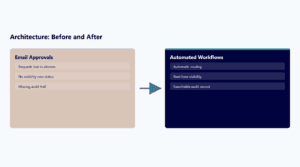
Manual approval processes in regulated industries average 7–14 days cycle time, while automated workflows reduce this to 2–3 days with complete audit trails. This improvement translates directly to operational capacity and service delivery improvements that management can measure and defend.
Labor efficiency gains extend beyond simple task elimination. Automated workflows reduce the administrative overhead associated with process coordination, status tracking, and exception handling. Cross-departmental process visibility improvements show measurable impact within 90 days, with stakeholders reporting 30–45% better status transparency.
The key to building credible efficiency arguments lies in documenting current-state process costs, including hidden coordination time and rework cycles. Organizations that quantify these baseline metrics can present automation ROI calculations that withstand financial scrutiny and post-implementation validation.
Compliance and Auditability Improvements
Organizations report 35–50% reduction in compliance documentation time when workflow automation includes built-in approval tracking and retention policies. This improvement addresses both direct compliance costs and the operational disruption associated with audit preparation and remediation activities.
Regulated enterprises see 25–40% fewer audit findings when automated workflows enforce consistent approval hierarchies and documentation standards. The ability to demonstrate consistent policy enforcement, complete approval documentation, and systematic exception handling provides measurable risk reduction that executives can quantify and defend to regulatory bodies.
The compliance value proposition becomes compelling when organizations can connect process improvements to specific regulatory requirements. When automated workflows eliminate approval bypasses, ensure consistent documentation standards, and provide complete audit trails, these improvements translate directly into reduced regulatory exposure and audit preparation costs.
Organizations leveraging Microsoft 365 for workflow automation benefit from built-in compliance features including retention policies, audit logging, and data loss prevention. Power Automate workflows automatically inherit tenant-level security policies and provide detailed execution logs that satisfy most regulatory audit requirements. SharePoint approval workflows maintain complete approval chains with timestamps, user authentication, and document version control.
Service Quality, Backlog Reduction, and Reduced Rework
Rework rates drop by 20–35% when automated workflows include validation checkpoints and standardized handoff procedures. This improvement addresses both direct labor costs and the service quality issues that affect customer satisfaction and operational reputation.
The service quality argument becomes compelling when organizations document the cost of process failures, customer complaints, and service recovery activities. Automation business cases that include these “cost of poor quality” metrics receive stronger management support than those focused solely on labor efficiency.
What Management Will Want to See Before Approving Automation Work
Clear Process Pain
Management approval for workflow automation requires demonstrating specific, measurable process problems that automation can solve. Generic efficiency claims fail to generate executive support, while documented pain points with quantified business impact create compelling investment justification.
The most effective business cases identify processes where manual handoffs create delays, inconsistent execution generates rework, or lack of visibility causes customer service problems. Regulated enterprises value process pain documentation that connects operational inefficiencies to compliance risks or audit findings.
Successful business cases quantify current-state problems with specific metrics: average approval cycle times, monthly status inquiries, error rates, and rework percentages. These baseline measurements provide the foundation for credible ROI projections and post-implementation success validation.
Controlled Scope and Ownership
Successful workflow automation business cases define clear project boundaries and establish unambiguous ownership for both implementation and ongoing operations. Management approval depends on understanding what processes will change, who will be responsible for the transformation, and how success will be measured.
Enterprises with phased automation rollouts report 60% higher user adoption rates compared to big-bang implementations, making controlled scope definition essential for project success. Ownership clarity extends beyond project delivery to include ongoing governance, user support, and process optimization.
Realistic Delivery and Support Plan
Management expects workflow automation business cases to include comprehensive delivery timelines and ongoing support cost estimates. Post-implementation support costs average 15–20% of initial development investment annually, often overlooked in business cases that focus exclusively on implementation expenses.
Realistic delivery planning acknowledges that workflow automation projects require user training, change management, and iterative optimization beyond initial deployment. The business case should model these ongoing expenses as operational requirements rather than optional enhancements.
- Initial deployment typically requires 3–6 months, followed by 6–12 months for full user adoption and process optimization
- Business cases should model this extended timeline with specific checkpoints for training completion, process validation, and benefit measurement
- Organizations that rush automation deployments experience 40% higher failure rates and require costly remediation efforts that exceed initial project budgets
- Governance costs in regulated environments are not optional: change management protocols, compliance validation, and audit documentation require dedicated resourcing
How to Connect Workflow Automation to Strategic Outcomes
Risk Reduction
Risk reduction represents one of the most compelling strategic justifications for workflow automation in regulated enterprises. Automated workflows eliminate human error in critical processes, ensure consistent compliance procedures, and provide complete audit trails that reduce regulatory exposure.
Quantifying risk reduction requires connecting process improvements to specific risk categories that management already tracks. When automated workflows reduce data entry errors, eliminate approval bypasses, or ensure consistent documentation, these improvements translate directly into measurable risk reduction that supports strategic risk management objectives.
Operational Resilience
Automated workflows provide operational continuity during staff transitions, peak demand periods, and unexpected disruptions. This resilience becomes valuable in regulated environments where process interruptions can create compliance gaps or service delivery failures.
The strategic value of operational resilience justifies workflow automation investments even when direct labor savings are modest. Management recognizes that process automation provides insurance against operational disruption while enabling consistent service delivery under varying conditions.
Cross-Functional Productivity and Visibility
Strategic workflow automation initiatives improve productivity across organizational boundaries rather than within individual departments. Automated workflows eliminate information silos by providing real-time process status to all stakeholders, reducing email inquiries, status meetings, and duplicate work.
When automated workflows provide faster response times, more accurate information, and consistent service delivery, these improvements support broader business objectives beyond internal operational efficiency.
Common Mistakes That Weaken the Business Case
Overpromising Labor Savings
The most common error involves calculating labor savings based on eliminated manual tasks without accounting for new responsibilities: exception handling, business rule maintenance, user support, and process optimization activities that automated workflows require.
Realistic labor calculations recognize that workflow automation shifts human effort rather than eliminating it entirely. The business case should model labor reallocation — moving personnel from routine administrative tasks to analysis, improvement, and strategic activities — rather than promising wholesale headcount reduction.
Overpromising creates credibility problems that extend beyond individual projects. When initial automation investments fail to deliver projected savings, subsequent business cases face increased scrutiny and higher approval thresholds.
Ignoring Governance and Post-Launch Costs
Business cases that focus exclusively on development costs while overlooking governance, support, and maintenance expenses create budget shortfalls that undermine project success. Post-implementation costs include user training, help desk support, process modifications, and platform updates that maintain automated workflows over time. Organizations that fail to budget for these activities often experience degraded automation performance, user frustration, and eventual process reversion to manual methods.
Failing to Distinguish Redesign from Automation
Many business cases conflate process redesign benefits with automation technology gains, creating unrealistic expectations. When process optimization delivers 60% efficiency improvement and automation adds another 30%, stakeholders need clarity about which gains result from business rule changes versus technical implementation. The business case should separate redesign benefits from automation benefits to provide realistic projections about technology impact.
How i3solutions Helps Clients Build Credible Workflow Roadmaps
Our discovery methodology identifies automation opportunities through process mapping, stakeholder interviews, and current-state analysis that reveals specific inefficiencies and improvement potential. Rather than generic automation assessments, we focus on measurable pain points: approval cycle times, error rates, resource allocation, and compliance gaps that create compelling business justification.
When document approval workflows generate 200+ monthly status inquiries and consume 40% of administrative staff time, the automation value proposition becomes quantifiable and defensible. We document current-state metrics that provide baseline measurements for ROI calculations and success validation.
Our delivery planning incorporates governance requirements from project initiation: change management protocols, compliance validation procedures, and support transition activities that ensure sustainable automation outcomes. Audit trail design, approval hierarchy enforcement, and retention policy implementation are addressed during development rather than as post-implementation remediation.
Post-deployment, our execution methodology includes performance monitoring, user adoption tracking, and continuous optimization activities that maximize automation value. When automated approval workflows reduce processing time from 14 days to 3 days while maintaining complete audit trails, these results provide evidence for expanded automation investments and ongoing program funding.
Frequently Asked Questions: Workflow Automation Business Cases in Regulated Enterprises
How do you calculate realistic ROI for workflow automation in regulated industries?
Focus on cycle time reduction, compliance cost savings, and risk mitigation rather than just labor elimination. Include ongoing governance costs (15–20% annually) and model labor reallocation rather than headcount reduction. Document current-state metrics like approval delays, rework rates, and audit preparation time to establish credible baselines.
What governance costs should be included in workflow automation business cases?
Include user access management, business rule maintenance, compliance validation, audit trail management, and ongoing user support. These represent 15–20% of initial development costs annually and are essential for sustainable automation in regulated environments.
How can workflow automation improve audit readiness in regulated enterprises?
Automated workflows create complete audit trails, enforce consistent approval hierarchies, and eliminate documentation gaps that manual processes often create. Organizations see 25–40% fewer audit findings when automated workflows enforce standardized procedures and maintain comprehensive approval records.
What is the difference between process redesign and automation benefits?
Process redesign eliminates unnecessary steps and optimizes business rules, often delivering 60%+ efficiency gains. Automation then amplifies the improved process, adding another 20–30% improvement. Successful business cases separate these benefits to set realistic expectations about technology impact versus workflow optimization.
How do you handle executive concerns about automation risks in regulated environments?
Address risk concerns by demonstrating how automation reduces human error, ensures consistent compliance procedures, and provides better audit trails than manual processes. Present automation as risk mitigation tools that strengthen control frameworks rather than introducing new operational risks.
What metrics matter most for workflow automation business cases?
Focus on cycle time reduction, error rates, compliance documentation time, audit findings, and cross-departmental visibility improvements. These operational metrics resonate more with executives than technical capabilities, especially when connected to customer experience and regulatory compliance.
How do you ensure user adoption for automated workflows?
Plan for phased rollouts, comprehensive training, and change management from project initiation. Include user adoption metrics in success criteria and budget for ongoing support and process optimization. Organizations with structured adoption programs report 60% higher success rates.
Scot co-founded i3solutions nearly 30 years ago with a clear focus: US-based expert teams delivering complex solutions and strategic advisory across the full Microsoft stack. He writes about the patterns he sees working with enterprise organizations in regulated industries, from platform adoption and enterprise integration to the operational decisions that determine whether technology investments actually deliver.
Leave a Comment