
By Scot Johnson, Founder / CEO, i3solutions. Scot Johnson co-founded i3solutions 30 years ago with a focus on expert-led delivery, strategic advisory, and complex Microsoft-centered solutions for organizations where technology decisions carry operational, financial, and mission risk.
To hire Microsoft developers well, you need two decisions made in the right order: which specialty the work actually requires, and what kind of engagement fits. i3solutions provides senior, US-based Microsoft developers across the full stack: SharePoint, Dynamics 365, Power Platform, Azure, .NET, and the data, integration, and governance layers that connect them. Every developer joins on a scoped engagement with a defined deliverable, not as an anonymous seat on a bench. This page is the starting point. It explains what each type of Microsoft developer builds, what the US market pays for the skill set, and how an on-demand engagement works, then routes you to the dedicated hiring page for the exact specialty you need.
“Microsoft developer” is a job posting, not an engineering plan. The platform is too broad for one generalist title: the person who writes SPFx web parts is rarely the person who tunes a DAX semantic model or authors a Dataverse plugin. Match the work to the specialty below, then use that specialty’s hiring page, which covers roles, vetting, and delivery models in depth.
If the work crosses several of these areas, which enterprise work usually does, start with the specialty that owns the system of record and bring in adjacent skills as scoped roles rather than hiring a second generalist.
Most organizations that search for Microsoft developers do not actually want a permanent hire. They want senior capability, on their systems, this quarter, without recruiting risk. i3solutions delivers that through on-demand engagements: a scoped team or individual specialist, US-based, working inside your environment and your standards, with the engagement sized to the backlog rather than billed as an open-ended seat. Senior Microsoft specialists from i3solutions typically embed in the client’s team within two to four weeks of engagement start. An i3solutions engagement also does not produce vendor lock-in: the deliverable includes the documentation and knowledge transfer your internal team needs to own the result. The full model, including how scoping and ramp-up work, is covered on our on-demand Microsoft experts page. And when the engagement is also meant to grow your internal bench, it can be staffed as a senior consultant who mentors while delivering.
i3solutions was co-founded 30 years ago around a single model: US-based expert teams delivering complex solutions and strategic advisory across the full Microsoft stack. That focus shows up in the work. i3solutions runs a governed Power Platform for a federal defense agency supporting roughly 10,000 personnel across about 180 locations, and has delivered enterprise SharePoint consulting for defense contractors and a federal research agency. The same delivery discipline carries into regulated commercial sectors, including aerospace and defense manufacturing and financial services.
Because much of that work is compliance-bound, i3solutions teams maintain dedicated compliance specialists who understand CMMC, HIPAA, SOC 2, and financial services regulations within Microsoft environments. i3solutions is a Microsoft Solutions Partner, and every developer and consultant on a client engagement is US-based. The results are measured in operational terms: one IT systems analysis for a federal housing agency identified about $1.5 million in savings and led to processing roughly 35 percent faster. You are not screening resumes from a marketplace; you are engaging an engineering firm that has already done the vetting and stands behind the delivery.
Whether you hire directly or engage a firm, certifications alone are a weak filter. Insist on production evidence in the specialty you are hiring for: an SPFx solution running in a real tenant, a Dataverse plugin the candidate wrote and can defend, a DAX semantic model they certified, an Azure Functions workload they operated after go-live. Then vet the governance layer, because that is where enterprise Microsoft projects actually fail: environment strategy and DLP policy on Power Platform, row-level security in Power BI, least-privilege access in Azure, and information architecture in SharePoint. Finally, test whether the developer can explain a technical decision to a business owner, since Microsoft platform work lives or dies on adoption. These are the same screens i3solutions applies before a developer ever joins a client engagement, which is why the per-specialty pages linked above each describe vetting in that specialty’s own terms.
Published US market data puts full-time Microsoft developer compensation in a fairly narrow band. Talent.com, aggregating 10,000 US salaries for the title (accessed July 2026), reports an average of $120,233 per year, roughly $60.85 per hour, with entry-level positions starting near $100,000 and experienced developers reaching $151,028. Read those numbers as the cost of one seat, before recruiter fees, ramp-up time, and the risk that the person you hired for SharePoint is now needed for Azure.
The seat is also not the result. A senior Microsoft build typically needs several named skills at different depths: SPFx for SharePoint customization, Power Fx and Dataverse plugins on the Power Platform side, Azure Functions for serverless workloads, and .NET APIs to tie systems together. Very few individual hires cover that spread. i3solutions does not publish an hourly rate card because we do not sell seats. We scope the engagement to the outcome, staff it with the right mix of specialists, and give you one price to weigh against the fully loaded cost of hiring at the market rates above.
Senior Microsoft specialists from i3solutions typically embed in the client’s team within two to four weeks of engagement start. That window covers scoping, access provisioning, and environment onboarding, which in government and compliance-bound environments is usually the pacing item, not developer availability.
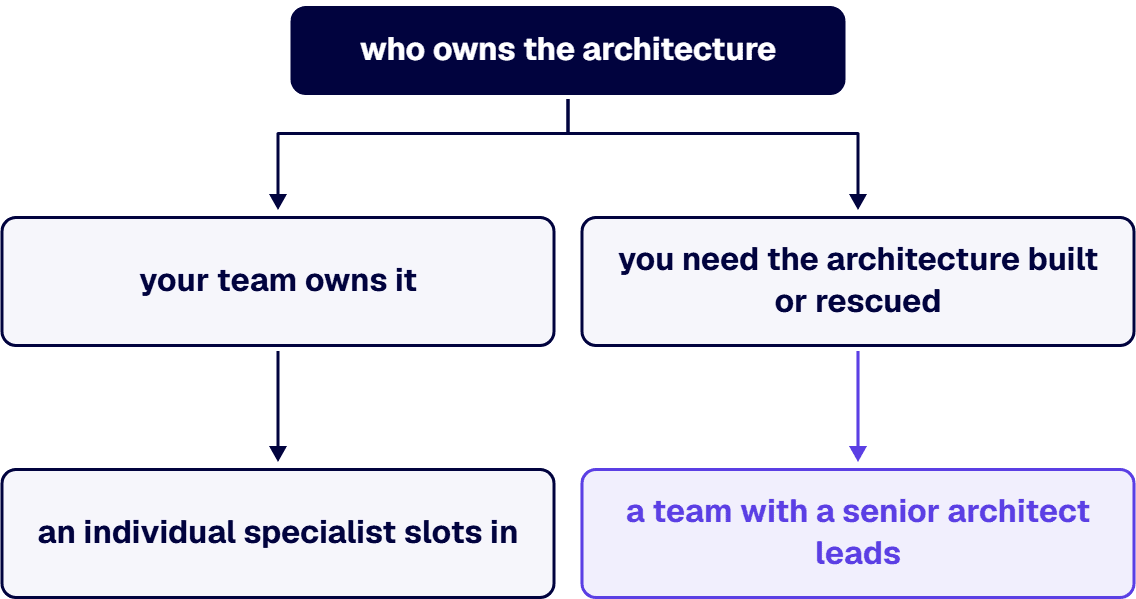
Both. Some engagements need a single senior specialist embedded in your existing team; others need a scoped delivery team with an architect, developers, and a delivery lead. The deciding factor is who owns the architecture: if your team owns it, an individual specialist slots in; if you need the architecture built or rescued, a team with a senior architect leads.
Yes. i3solutions delivery teams are US-based, and the firm’s track record includes federal defense and civilian agency work alongside regulated commercial sectors. Teams include dedicated compliance specialists who understand CMMC, HIPAA, SOC 2, and financial services regulations within Microsoft environments.
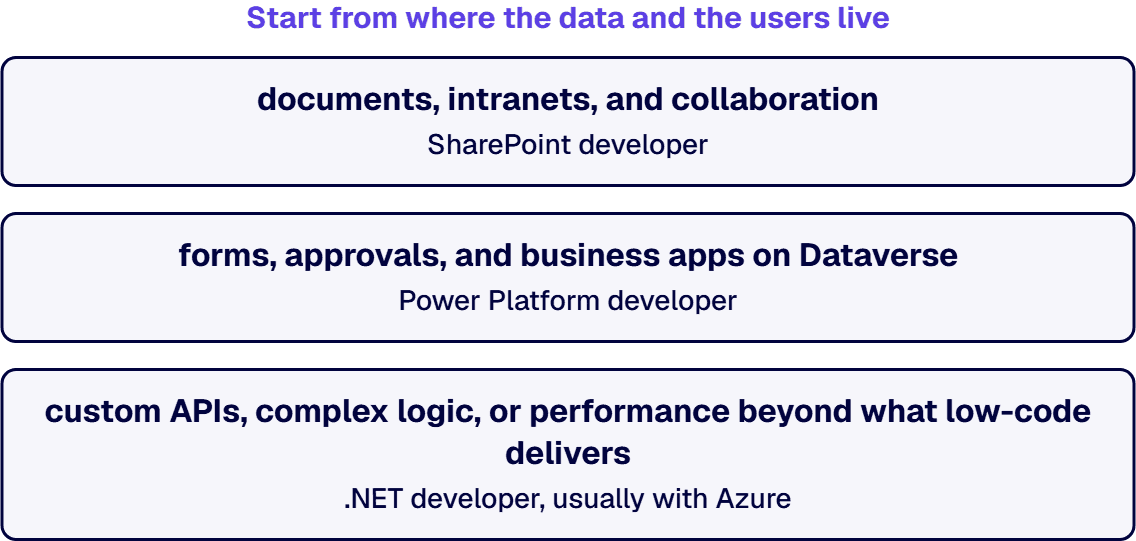
Start from where the data and the users live. If the work centers on documents, intranets, and collaboration, that is a SharePoint developer. If it is forms, approvals, and business apps on Dataverse, that is a Power Platform developer. If it needs custom APIs, complex logic, or performance beyond what low-code delivers, that is a .NET developer, usually with Azure. The router table above links to a dedicated hiring page for each path, and a scoping conversation settles borderline cases quickly.
Hiring a developer means you own recruiting, vetting, management, and utilization for one person’s skill set. An on-demand engagement means i3solutions puts the right specialists on your backlog under a scoped agreement, flexes the mix as the work changes, and hands the result to your team without vendor lock-in. If the need is a permanent internal role, hire; if the need is senior capability applied to a defined body of work, the engagement model is usually faster and lower risk. It is also how i3solutions delivers its largest programs, including the governed Power Platform it runs for a federal defense agency supporting roughly 10,000 personnel: an engineering firm accountable for the outcome, not a marketplace screening resumes.

US-Based | Est. 1997
© i3solutions. All rights reserved.
US-Based | Est. 1997
© i3solutions. All rights reserved.


