When a high-visibility Microsoft initiative is slipping or losing stakeholder confidence, the problem is no longer only technical. It’s a leadership, governance, and reputation risk. Deadlines move, vendors give different explanations, and status reports still show activity, but leadership can’t tell whether the work is heading toward a controlled outcome.
i3solutions provides project recovery services, sometimes called project rescue, for enterprise Microsoft initiatives that need stabilization, salvage, and reset. Our senior, US-based teams regain control of troubled programs by clarifying ownership, triaging technical and operational risk, restoring release discipline, rebuilding governance, and setting a credible path back to production-grade delivery.
This isn’t a cosmetic reporting exercise or a restart for its own sake. It’s structured intervention for an initiative that has become too exposed to keep running on optimistic updates, disconnected workstreams, and internal fixes that aren’t holding.
At this stage, leaders need more than another status update or added development capacity. They need a clear read on what’s failing, what can be salvaged, what has to be reset, and what happens next. That read is the first thing recovery produces, before any code changes.
When a Microsoft project is stalled, unstable, or losing stakeholder trust, waiting rarely reduces risk. i3solutions assesses the true state of the work, identifies immediate stabilization priorities, and defines a credible recovery path.
Enterprise technology initiatives rarely fail without warning. The signs usually appear first in missed milestones, unstable releases, unclear ownership, integration failures, audit pressure, or declining stakeholder confidence. By the time the issue reaches executive visibility, the organization is often managing exposure as much as delivery.
Project recovery becomes appropriate when normal project management no longer restores control. The work may still be active, but activity is not the same as recovery. For stalled IT projects and troubled Microsoft programs, the real question is whether leadership has a credible view of what is failing, what can be salvaged, what must change, and how the initiative can return to controlled delivery with clear ownership, risk visibility, and production readiness.
Dates move, dependencies remain unresolved, and status updates do not explain how the project gets back to production readiness.
Routine updates begin causing defects, outages, access issues, reporting errors, or downstream integration failures.
Internal teams, vendors, business stakeholders, and platform owners are involved, but no one clearly owns the end-to-end outcome.
Stakeholders request documentation, approvals, traceability, testing evidence, or access-control clarity that the current delivery model cannot readily produce.
A critical system still supports operations, but the people who understand it are gone, unresponsive, or unable to support the current risk level.
The organization has tried to stabilize the issue, but competing priorities, limited bandwidth, or missing technical context keep the project exposed.
Executives, business owners, customer-facing teams, or compliance stakeholders are asking harder questions because the project is now tied to reputation, revenue, audit exposure, or continuity.


A troubled Microsoft project may begin as a technical issue, but once it becomes visible to leadership, the organization is protecting more than a system. They are protecting credibility. The project may affect a customer relationship, audit posture, operational continuity, budget confidence, or the internal reputation of the team responsible for the work.
That is why project recovery needs to produce two things at the same time: technical stabilization and leadership-ready clarity. Technical stabilization reduces operational risk. Leadership-ready clarity gives executives, sponsors, and stakeholders a defensible explanation of the current state, recovery priorities, decisions required, and next steps.
A recovery engagement should not create another layer of vague reporting. It should clarify the truth of the work. What is failing? What has value? What is creating risk? What must pause? What can continue? What decisions are blocking progress? What evidence proves the project is moving back under control?
i3solutions approaches project recvery as a risk-aligned intervention. The goal is not to assign blame. The goal is to restore control, define the recovery path, and give leadership a credible basis for action before the project becomes more expensive or politically difficult to recover.
When pressure increases, organizations often respond with actions that feel decisive but compound risk. They add resources, compress testing, expand parallel workstreams, relaunch the project under a new name, or ask already-stretched internal teams to fix the issue while continuing normal operations. Project recovery creates the control needed before those reactions create additional failure points.

Pushing a troubled project to move faster can increase defects, missed dependencies, and rework when release discipline is already weak. Recovery restores sequencing, testing expectations, decision checkpoints, and change control so speed does not create new instability.

Agile delivery can become an excuse for uncontrolled scope when decision rights are unclear. Stabilization reestablishes boundaries, acceptance criteria, and impact analysis so new requests do not quietly move the project away from the outcome leadership expects.
Broken integrations, unreliable reports, access issues, and production defects often point to deeper problems in governance, architecture, ownership, or release management. Recovery addresses the structure behind recurring failure, not only the visible symptoms.
Regulated environments need traceability, approvals, testing evidence, and documentation throughout delivery. Recovery builds evidence generation into the recovery model so teams are not reconstructing proof under pressure.
A restart may be necessary in some cases, but restarting without correcting the original failure conditions creates the same risk in a new structure. Recovery identifies what can be salvaged, what must be reset, and what should not move forward.
Project recovery requires a clear sequence. Without sequence, the organization can end up fixing visible issues while the root causes remain unresolved. i3solutions uses a stabilization model that restores visibility first, reduces immediate risk, replans the work around reality, and transitions the project back into accountable delivery.
i3solutions reviews delivery status, open risks, unresolved blockers, system dependencies, vendor roles, release practices, documentation gaps, production issues, and stakeholder concerns. The objective is a fact-based view of the project, not another optimistic status narrative.
Immediate actions may include freezing unstable changes, clarifying release gates, isolating critical defects, aligning environments, assigning ownership, improving issue visibility, or escalating decisions that have stalled.
The recovery plan must reflect dependencies, constraints, technical debt, stakeholder obligations, and production readiness requirements. Scope boundaries, acceptance criteria, decision checkpoints, and risk sequencing are defined so the plan can be executed and defended.

Work resumes through defined checkpoints for architecture alignment, testing readiness, integration behavior, user impact, security expectations, and operational validation. Progress is measured through evidence, not activity alone.

Recovery is complete only when the project can operate without emergency oversight. Documentation, knowledge transfer, runbooks, monitoring expectations, escalation paths, and ownership models support the transition back to sustainable delivery or operations.
Recovery works when execution returns to a disciplined sequence: triage, stabilize, replan, deliver, and operationalize. i3solutions restores that structure so critical Microsoft projects can move forward with stronger accountability.
In recovery mode, not every issue receives equal attention at the same time. i3solutions focuses first on the control areas most likely to create further delivery instability, stakeholder confusion, or production risk. These areas are evaluated early and often stabilized in parallel, creating the foundation for a credible recovery plan.
Troubled projects often suffer from unclear decision rights. i3solutions defines who owns key decisions, how escalations move, how tradeoffs are recorded, and which issues require leadership action. A decision log creates traceability and reduces repeated debate.

Unstable releases damage confidence quickly. Stabilization defines release gates, freeze points, rollback expectations, validation criteria, and sequencing rules so changes move toward production without creating avoidable downstream issues.
Differences between development, test, staging, and production environments can create recurring defects. Recovery work verifies configuration baselines, access controls, dependencies, and environment consistency so deployment behavior becomes more predictable.
Integration failures often expose larger delivery problems. i3solutions reviews the most critical handoffs, connector behavior, API dependencies, data movement, downstream systems, and failure points so the project can reduce cascading risk.

Leadership needs a clear view of what is known, what is unresolved, and what decisions are required. A known-issues register, risk register, dependency map, and recovery dashboard create shared visibility without turning reporting into a substitute for action.

Project recovery should produce artifacts that create control and confidence. The right artifacts give leadership a clearer view of current risk, recovery priorities, ownership, and the decisions required to move the project forward.
The value of these artifacts is practical. They reduce ambiguity, make recovery visible, and give leadership something concrete to review, defend, and track.
A successful recovery engagement should leave the organization with more than temporary relief. The project should have clearer ownership, stronger decision control, improved release discipline, better issue visibility, and a recovery path grounded in technical and operational reality.
Project recovery is designed to produce:
These outcomes reduce uncertainty and give leaders a clearer basis for deciding whether to continue, pause, reset, re-scope, or transition the initiative.

Project recovery applies when a Microsoft initiative has moved beyond normal delivery friction and entered a higher-risk recovery situation. The work may involve modernization, migration, workflow automation, platform integration, or a custom application, but the immediate need is the same: restore control, reduce exposure, clarify ownership, and define a credible path forward.
A business-critical application is failing, unsupported, poorly documented, or dependent on a retired developer. The immediate need is to stabilize risk, understand what still works, and determine whether the application should be repaired, modernized, replaced, or contained.
The project may involve content, permissions, workflows, governance, intranet delivery, records, or user adoption. Rescue focuses on restoring ownership, release discipline, production readiness, and stakeholder confidence.
Power Automate flows, Power Apps, approvals, connectors, or low-code solutions may have grown without enough governance. Recovery identifies the urgent failure points and defines what must be stabilized before broader automation work continues.
A migration or modernization effort may be missing deadlines, surfacing integration issues, or losing confidence before cutover. Recovery stabilizes the project path without turning this page into a migration or modernization service page.
Several vendors or internal teams may be involved, but accountability for the outcome is unclear. Recovery clarifies decision authority, integration ownership, workstream responsibility, and leadership reporting.
Security, compliance, or audit stakeholders identify gaps in access control, evidence, documentation, change management, or production readiness. Recovery brings those gaps into the recovery model instead of treating them as late-stage cleanup.
The concept may be promising, but the initiative lacks clear validation criteria, trusted data flows, integration readiness, governance, or an operational path that leadership can support.
When a project is already exposed, the next decision should be based on facts, not hope. i3solutions assesses the current state, identifies the highest-risk gaps, and defines the recovery options leadership can act on.
Project recovery is different from planned consulting, modernization, migration, automation, or integration work because the initiative is already under pressure. The priority is no longer defining what should improve. It is restoring control, reducing exposure, and creating a credible recovery path before the project becomes harder to defend.
| Service Area | Planned Work | Recovery Trigger |
|---|---|---|
| Modernization | Improve systems, workflows, data foundations, integration patterns, or governance. | The modernization effort is stalled, unstable, exposed, or losing executive confidence. |
| Migration | Move applications, data, content, infrastructure, or workloads into a destination environment. | The migration path is missing readiness milestones, creating production risk, or raising stakeholder concern before cutover. |
| Workflow Automation | Design, engineer, and integrate governed workflows. | The automation effort is unreliable, ungoverned, difficult to support, or unable to move safely into production. |
| Microsoft System Integration | Connect Microsoft platforms, applications, data, workflows, identity, reporting, and governance models into a cohesive enterprise environment. | Microsoft ecosystem dependencies are breaking across platforms, ownership is unclear, workflows or data are not moving reliably, or production readiness is at risk. |
| Enterprise Platform Integration | Connect external platforms such as Salesforce, ServiceNow, ERP, CRM, HR, finance, geospatial, or other line-of-business systems into the Microsoft environment. | External-system integration failures are creating delivery instability, unclear ownership, unreliable data movement, broken handoffs, or downstream operational risk. |
| Advanced Technology & Analytics | Validate, prototype, integrate, or operationalize analytics, AI, geospatial, BI, data fusion, or decision-support capabilities. | The initiative has stalled before production, lacks clear validation evidence, carries unresolved data or integration risk, or is losing stakeholder confidence because the value is not translating into an operational system. |
Project recovery involves the same Microsoft platforms, systems, and workflows as other service areas, but the need is different. The priority is restoring control when the work is already stalled, unstable, exposed, or losing confidence.
Project recovery requires a high-trust delivery model because the work often touches sensitive systems, production issues, privileged access paths, vendor work products, audit concerns, internal documentation, and leadership-facing project information. i3solutions brings senior delivery discipline to those conditions from the start, so stabilization work is handled with the control, discretion, and traceability the situation requires.
i3solutions delivers project rescovery services through senior, US-based teams experienced in Microsoft-centric enterprise environments. Security, access governance, documentation, change control, and audit readiness are built into stabilization rather than treated as final checklist items after recovery decisions have already been made.

Project recovery involves production environments, identity models, permissions, data movement, integrations, and administrative access. i3solutions reviews access expectations, privileged paths, role clarity, and security implications before recommending recovery actions.
Troubled projects often suffer from unclear decisions and undocumented tradeoffs. i3solutions creates traceability around decisions, risks, approvals, and recovery priorities so leadership can see how the project is being brought back under control.
Regulated and risk-sensitive environments need evidence. Recovery work accounts for testing records, change control, release readiness, access decisions, support handoffs, and operational documentation.
Project rescue is not well suited to disconnected escalation chains or junior delivery models. i3solutions uses senior teams that can engage across technical, operational, and governance issues with the maturity required for exposed initiatives.
Project recovery is designed for organizations with a Microsoft initiative that still has business value, but no longer has enough delivery control, visibility, or confidence to keep moving through normal project routines. The strongest fit is a high-visibility project where leadership needs a credible recovery path, clear ownership, and a disciplined way to determine what should be stabilized, salvaged, reset, or stopped.
Best fit scenarios
Less Suited for
Project rescue requires more than a narrow technical skill set. The team must understand how Microsoft environments behave inside real enterprise operating models, where governance fails, how integrations create downstream risk, how production readiness is validated, and how leaders need to see recovery progress.
Project recovery requires more than a narrow technical skill set. The team must understand how Microsoft environments behave inside real enterprise operating models, where governance fails, how integrations create downstream risk, how production readiness is validated, and how leaders need to see recovery progress.
i3solutions brings 30 years of enterprise technology delivery experience across Microsoft-centered system integration, application modernization, workflow automation, data and reporting, identity, governance, documentation, and production support. That breadth matters in recovery because stalled projects rarely fail in only one place. The issue may appear in code, but the cause may sit in ownership, architecture, release control, integration design, audit evidence, or stakeholder alignment.
Our delivery model is senior-led and US-based. i3solutions restores control without forcing unnecessary restart, protects salvageable progress, and creates a recovery model internal leaders can understand and defend. Knowledge transfer and documentation are built into the engagement so the organization is not left dependent on another undocumented recovery effort.

Real-world case studies and expert perspectives showing how organizations operationalize Microsoft platforms with governance, scale, and confidence.
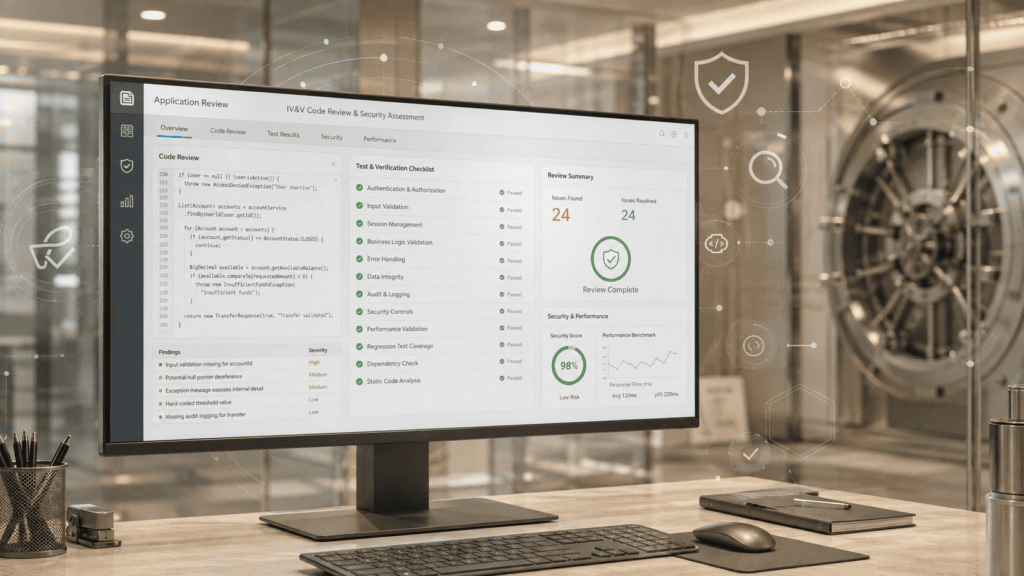
Vendor-built paying agency software went live without independent verification of its objectives or vulnerabilities. i3solutions ran an IV&V review that surfaced security gaps while fixes were still cheap, letting the bank harden the application before go-live.
Rapid global response depended on intelligence scattered across separate repositories a legacy application couldn't unify. i3solutions built a data fusion platform consolidating it into one repository, with geospatial mapping and dashboards giving analysts a single interface.
Yes. They’re the same work under two names. “Recovery” is the term used in formal project management for a structured effort to stabilize a troubled initiative and return it to controlled delivery. “Rescue” is the informal term for the same thing. i3solutions runs the engagement the same way regardless of what you call it: find what’s failing, determine what can be salvaged, and re-establish a credible path to production.
Modernization is usually a planned improvement effort. Project recovery is an intervention when an initiative is already stalled, unstable, visible, or losing confidence. Recovery may lead to modernization later, but the first priority is stabilization and recovery control.
Not necessarily. In many cases, i3solutions works alongside internal teams or existing vendors to clarify ownership, stabilize risk, and define the recovery path. Replacement is not the default assumption.
Yes. Recovery often begins because the full scope is unclear. The first step is a structured review of the current state, risks, dependencies, blockers, and decision needs.
Yes. In some recovery situations, the right answer is not to keep pushing the same plan forward. i3solutions evaluates what can be stabilized, what can be salvaged, what requires reset, and whether the initiative should continue, pause, re-scope, or transition.
That is a common recovery trigger. i3solutions can review available documentation, code, configurations, integrations, data structures, production behavior, and business dependencies to determine what can be stabilized or transitioned.
Yes. Production instability is one of the clearest reasons to consider recovery. The focus is to reduce immediate risk, clarify root causes, strengthen release discipline, and define a path to reliable operations.
Stabilized means the project is no longer operating through uncontrolled escalation, unclear ownership, or reactive decision-making. Risks are visible, ownership is defined, release expectations are clearer, and leadership has a credible recovery path.
Timing depends on scope, access, urgency, and stakeholder availability. The first discussion should focus on the current risk level, systems involved, decision pressure, and whether a recovery review is the right next step.

US-Based | Est. 1997
© i3solutions. All rights reserved.
US-Based | Est. 1997
© i3solutions. All rights reserved.