Modernization initiatives break down when organizations treat them as platform upgrades, application rewrites, or broad transformation programs without first identifying where operational risk actually lives. Years of tactical fixes, point-to-point integrations, manual workarounds, undocumented dependencies, and ownership gaps often create more constraint than the age of the underlying systems.
The issue is rarely whether a system is old. The issue is whether the current environment still supports change, governance, integration, security, and long-term operational ownership. When those foundations weaken, even reliable systems become difficult to modify, audit, scale, or connect to new business capabilities.
i3solutions approaches modernization as controlled enterprise evolution inside Microsoft environments. Our teams assess where systems constrain operations, where risk has accumulated, and where selective modernization creates the greatest business and technical value without forcing unnecessary replacement.
Modernization work often includes application stabilization, workflow modernization, data and reporting foundations, integration redesign, identity alignment, and governance controls. The goal is not modernization for its own sake. The goal is a more adaptable, supportable, and defensible enterprise environment.
Modernization decisions require a clear view of operational risk, system constraints, integration dependencies, and business impact. i3solutions defines where modernization creates value, where existing systems should remain stable, and how to sequence change without increasing enterprise risk.
Enterprise modernization rarely fails because technology is incapable. It fails because organizations operate inside environments shaped by years of incremental fixes, competing priorities, and risk-avoidance decisions. Over time, these choices create friction that slows change, increases exposure, and makes it harder for leaders to determine where modernization should begin.
Many core systems remain reliable and deeply embedded in day-to-day operations. They process transactions, support customers, and underpin critical workflows. The challenge is not that these systems are broken, but that they are difficult to change safely. Even small updates carry disproportionate risk, making leaders hesitant to act. Application modernization in this context must respect operational dependence while addressing the constraints that limit adaptability.
As your organization grows, systems are added to solve immediate needs. Over time, platforms multiply, integrations become brittle, and ownership becomes unclear. Information is duplicated, processes span multiple systems, and failures are hard to trace. This fragmentation introduces hidden risk and operational drag, making your coordination slower and increasing the cost of change across the enterprise.
Spreadsheets, email-based approvals, and manual reconciliation often emerge as “temporary fixes” to system limitations. While these workarounds keep the business moving, they also obscure deeper architectural issues. Decision-makers may underestimate risk because your organization appears to function until scale, audit, or regulatory pressure exposes the fragility beneath the surface.
Enterprises frequently invest in cloud or AI initiatives expecting rapid gains, only to discover that existing architectures cannot support them. Poor data flow, unclear system boundaries, and weak governance models prevent these initiatives from progressing beyond pilots. Without addressing foundational constraints, your modernization efforts remain aspirational rather than operational.
As systems become harder to change, costs rise not just in spend, but in opportunity. Flexibility shrinks, risk increases, and governance gaps widen. Your leaders may be left managing trade-offs without clear options, resulting in decision paralysis at the very moment decisive action is required.
Enterprise modernization is often reduced to technology upgrades, platform migrations, or system replacements. At the enterprise level, however, modernization is better understood as capability renewal and the deliberate effort to ensure systems continue to support how your organization operates today and how it needs to operate tomorrow. The goal is not to replace technology for its own sake, but to restore flexibility and control where systems have become constraining.
Modern systems are defined less by the tools they use and more by what they enable. Capability renewal focuses on removing structural limitations that slow change, introduce risk, or force the business into manual workarounds. In many cases, this means strengthening foundations rather than starting over and preserving what works while modernizing the elements that limit adaptability and decision-making.
Over time, systems tend to become tightly coupled, difficult to modify, and expensive to maintain. Modernization shifts this dynamic by moving toward platforms that are more modular, observable, and governable. Adaptability becomes a design principle, not an afterthought. This allows you to introduce change incrementally while maintaining the controls required for security, compliance, and operational stability.
True modernization aligns your systems with your organization’s current operating model, regulatory environment, and growth trajectory. As roles change, oversight requirements increase, and your systems must reflect these realities rather than resist them. This alignment requires Microsoft consulting depth, enterprise architecture discipline, and practical delivery experience. i3solutions modernizes within the context of the broader Microsoft ecosystem, reducing the risk of new silos, unmanaged complexity, and disconnected platform decisions.
When modernization is approached at the capability level, outcomes extend beyond technical improvement. Organizations reduce operational and security risk, enable faster change without loss of control, and create systems that support scale, integration, and automation. Just as importantly, modernization clarifies ownership, lifecycle management, and accountability, giving your leaders the confidence to make decisions and the foundation to support what comes next.
Modernization should increase control, not introduce uncertainty. i3solutions defines the systems, workflows, data foundations, and integration constraints that require change before modernization investments become large, disruptive, or politically difficult to unwind.
Enterprise modernization should not be applied uniformly. Different parts of the environment age in different ways, and each introduces distinct constraints, risks, and opportunities. i3solutions focuses modernization on the areas that most directly affect operational resilience, governance, integration, and decision-making.
Applications often become constraints not because they fail, but because they no longer align with how your business operates.
The objective is not wholesale replacement, but restoring applications as assets that support change rather than resist it.
Data challenges are frequently a symptom of deeper structural issues rather than reporting tool limitations.
This often includes reducing reliance on fragile workarounds through spreadsheet modernization, ensuring data supports the organization at scale.
Disconnected systems create friction that compounds across the enterprise.
Integration modernization often requires disciplined Microsoft integration services that strengthen how systems communicate across workflows, data, and business functions without adding new point-to-point dependencies.
As environments grow more complex, governance gaps become a material enterprise risk.
This includes aligning modernization with system integration and access management solutions that clarify ownership, enforce lifecycle rules, and support regulatory expectations by design.

Modernization is not a single project or a technical checklist. It is a sequenced enterprise progression that clarifies constraints, defines target outcomes, reduces delivery risk, and preserves operational continuity while change occurs. i3solutions structures modernization around choice, sequencing, and enterprise value so leaders make defensible decisions before committing to large-scale change.

The first step is identifying where current systems limit strategy, speed, compliance, or operational reliability. i3solutions assesses operational friction, governance gaps, integration dependencies, and architectural constraints to define where modernization creates the greatest impact without unnecessary disruption.
Modernization is only useful when tied to clear enterprise outcomes. Leaders must define what “modern” means for the organization: reduced operational risk, faster change, scalable systems, improved data reliability, stronger governance, or better integration. i3solutions ties modernization targets to measurable operating outcomes
Not all systems require immediate transformation. Sequencing change intelligently allows your organization to modernize what matters, when it matters, preserving operational continuity while delivering incremental value. By prioritizing high-impact areas and planning

Risk reduction is built into every step of the path. Rather than attempting sweeping changes, we focus on controlled evolution, applying safeguards that maintain your stability, compliance, and operational performance. This disciplined approach prevents business disruption while enabling your modernization to move forward confidently.

Modernization also establishes the foundation for automation, AI, cloud adoption, and stronger integration. i3solutions uses Microsoft platform expertise and external platform integration discipline to create systems that support future capability without introducing new fragmentation, governance gaps, or operational risk.
This path gives leaders a clear, defensible modernization strategy that balances ambition,
operational continuity, and enterprise risk control.
Enterprise modernization raises a practical executive concern: how do systems improve without halting operations, overwhelming teams, or destabilizing critical workflows? i3solutions designs modernization as a risk-managed, coexistence-first progression so change moves forward while business operations continue.
Key approaches to modernization without disruption include:
Modernization without disruption turns a high-risk initiative into a controlled enterprise progression. Systems improve, governance strengthens, and future capabilities become easier to adopt without forcing business operations into unnecessary instability

Modernization should not require a disruptive reset. i3solutions sequences system, workflow, data, and integration improvements around current operational realities so critical business functions remain stable while enterprise capability improves.
Enterprise modernization requires access to systems, workflows, data, and integration patterns that often support critical business operations. Trust, security discipline, and delivery accountability must be established before modernization work begins.
i3solutions delivers modernization through senior, US-based teams experienced in Microsoft-centric enterprise environments. Our work aligns modernization decisions with identity controls, access governance, audit requirements, documentation standards, and operational ownership models from the start.
This approach reduces the risk of modernization creating new exposure, unmanaged dependencies, or support gaps. Systems are modernized with security, governance, and long-term ownership built into the delivery model, not added after technical changes are complete.
Modernization requires coordinated capability across applications, workflows, data, integration, cloud, security, and governance. i3solutions strengthens the enterprise foundations that allow modernization to produce measurable operational value without fragmenting the Microsoft environment.

Extend the value of critical applications by stabilizing architecture, reducing technical debt, and aligning systems to current operational requirements. This may include modernizing workflows and collaboration experiences across Microsoft Teams, Microsoft Forms, SharePoint, Power Platform, and custom application environments.
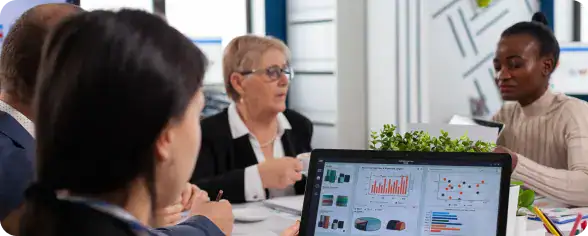
Establish reliable data flows and reporting structures that support decision-making, automation, analytics, and future AI readiness. Modernization often connects to Microsoft Fabric, Power BI, Dataverse, and Microsoft Copilot readiness when data quality, access, and governance need stronger foundations.
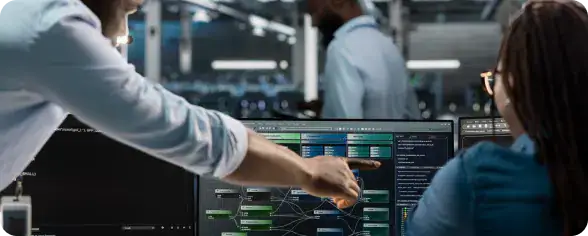
Strengthen how systems communicate, reduce manual handoffs, and replace brittle point-to-point dependencies with governed integration and workflow patterns. This often connects to Microsoft integration services, Power Automate, Azure integration services, and API-driven automation across enterprise systems.

Align cloud platforms, hosting models, and application architecture to resilience, scalability, cost control, and long-term operational ownership. Modernization may involve Azure services, cloud-native application development, hosting strategy, or phased migration planning.
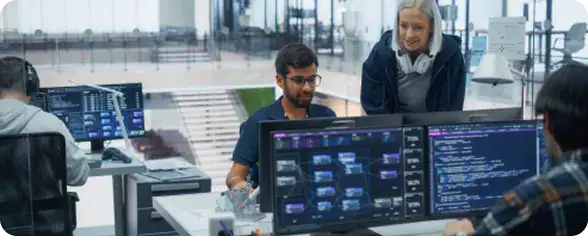
Embed identity, access, lifecycle, and audit controls into modernization work so change occurs inside secure and defensible operating boundaries. This often connects to Entra ID, Microsoft Purview, identity modernization, access governance, and compliance-focused Microsoft environments.
Together, these capabilities create a modernization path that improves system adaptability while preserving
governance, control, and operational continuity.
Enterprise modernization is rarely a single initiative. It spans multiple capability areas, each addressing a different source of friction, risk, or constraint across the organization. i3solutions structures modernization services so enterprises engage selectively, sequence change responsibly and focus on the areas with the greatest operational impact.

Modernize critical business applications without unnecessary rewrites or disruption. This service focuses on extending application value, reducing risk, and removing architectural constraints that slow delivery and change.
Modernize manual workflows, legacy forms, spreadsheet-supported processes, and approval paths that have become difficult to govern, scale, or support. This service focuses on controlled workflow automation, form intake, routing, auditability, and Microsoft platform alignment.z
Create trusted, scalable data foundations that support reporting, analytics, automation, and decision-making. This service addresses fragmentation, duplication, and manual reconciliation that limit insight and confidence.
Modernize identity, access, and governance models to reduce risk and support regulatory requirements. This service focuses on clarity of ownership, lifecycle enforcement, and security controls that scale with the enterprise.
Improve usability, adoption, and consistency across enterprise systems. UI/UX modernization ensures systems are aligned with how people actually work today, reducing friction and improving engagement without disrupting core functionality.
Some workflow and form modernization efforts begin with a business-critical spreadsheet that has grown into an operational dependency. When Excel supports approvals, reporting, reconciliation, forecasting, tracking, or workflow decisions, it may require a more focused modernization path.
Modernize identity, access, and governance models to reduce risk and support regulatory requirements. This service focuses on clarity of ownership, lifecycle enforcement, and security controls that scale with the enterprise.
Modernize identity, access, and governance models to reduce risk and support regulatory requirements. This service focuses on clarity of ownership, lifecycle enforcement, and security controls that scale with the enterprise.
i3solutions’ enterprise modernization services are designed for Microsoft-centric organizations where existing systems, workflows, data foundations, integrations, and governance models have become difficult to change, support, or defend.
This service is best aligned to enterprise IT leaders who need a practical modernization path that reduces operational risk, preserves system value, and creates stronger foundations for future initiatives.
Best fit scenarios
Some modernization requests are better handled as narrow support, maintenance, or enhancement efforts rather than enterprise modernization engagements.
Less suited for purely tactical needs
i3solutions is best aligned to modernization initiatives that require practical technical execution, Microsoft platform expertise, and a clear connection between business priorities, enterprise standards, and long-term system value.
Organizations typically engage i3solutions when existing systems begin to limit strategic flexibility, increase operational risk, or slow delivery across the Microsoft environment. Legacy applications, fragmented integrations, manual workflows, and unclear ownership models often make even minor changes complex, expensive, and difficult to defend.
Growth, mergers and acquisitions, regulatory pressure, cloud initiatives, AI pilots, and automation programs often expose modernization gaps that were previously hidden. At that point, incremental fixes no longer provide enough control. Leaders need a sequenced modernization path that clarifies what should change, what should remain stable, and what risks must be addressed first.
i3solutions brings 30 years of Microsoft platform, integration, and enterprise delivery experience to modernization work that cannot be treated as a generic technical upgrade. Our senior, US-based teams modernize selectively across applications, workflows, data foundations, integrations, identity, and governance so change strengthens the environment without destabilizing daily operations or creating new ownership gaps.

Real-world case studies and expert perspectives showing how organizations operationalize Microsoft platforms with governance, scale, and confidence.
Member records, dues, and a flagship annual placement event ran on spreadsheets and manual coordination, with that event alone taking three weeks of effort. i3solutions built a single ASP.NET and SharePoint membership platform that consolidated records and dues and cut event administration to two days, a 90% reduction.
Dues, records, and services for 2,650 member companies ran on a strained, outdated foundation worldwide. i3solutions rebuilt the platform as a modern, scalable .NET system in the same pass, adding integrated reporting and stronger security.
The timeline for modernization varies depending on the scope, complexity, and risk profile of your environment. i3solutions focuses on controlled, incremental progress, which allows your organization to realize value earlier and reduce operational disruption. Sequencing modernization intelligently ensures each stage aligns with your priorities and enables great outcomes without unnecessary delays.
No. Enterprise modernization focuses on capability renewal, not automatic replacement. Many systems are modernized through integration improvements, workflow redesign, governance upgrades, data foundation work, and phased application changes that preserve valuable existing investments.
Prioritization should be based on business impact, operational risk, integration dependency, governance exposure, and strategic value. i3solutions identifies the systems and workflows that most constrain change, increase support burden, or limit future initiatives so modernization starts where it creates the strongest enterprise impact.
Not when it is planned as a coexistence-first progression. i3solutions sequences modernization around current workloads, operational dependencies, integration requirements, and support structures so critical business functions remain stable while improvements are introduced.
Modernization establishes the architecture, data flow, integration, identity, and governance foundations required for advanced initiatives. AI, cloud, and automation programs depend on reliable systems, clear ownership, secure access, and production-ready data. Without those foundations, future technology investments often stall before enterprise adoption.
Enterprise modernization focuses on improving the systems, workflows, data foundations, integrations, identity controls, and governance structures the organization already depends on. Digital transformation is broader and often includes business model, customer experience, operating model, and organizational change. For many enterprises, modernization is the practical technical foundation required before larger transformation initiatives can succeed.
i3solutions reduces modernization risk by assessing operational dependencies before changes are made. That includes current workflows, system ownership, data movement, integration points, security requirements, governance gaps, and support structures. This approach creates a sequenced modernization path that improves the environment without destabilizing the business functions that depend on it.

US-Based | Est. 1997
© i3solutions. All rights reserved.
US-Based | Est. 1997
© i3solutions. All rights reserved.