
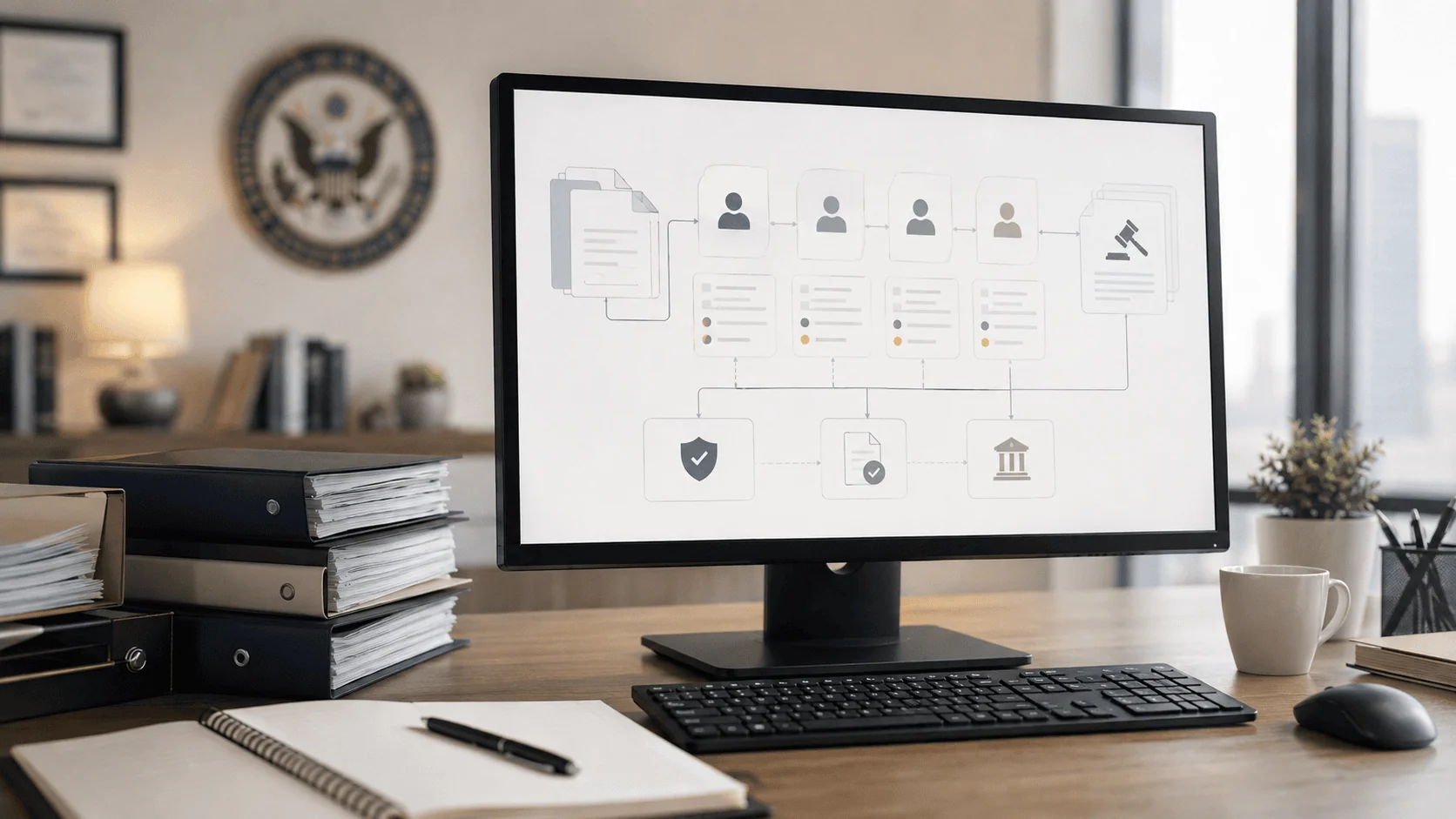
Tracking, awarding, and compensating arbitrators ran on an antiquated, entirely paper-based process.
The client is an independent federal agency whose primary mission is to promote peaceful and cooperative labor-management relations, prevent and mitigate labor disputes, and facilitate the negotiation of collective bargaining agreements between employers and labor unions. The agency achieves these goals through a range of services, including arbitration, dispute resolution, and training programs aimed at building effective communication and conflict resolution skills. Based in Washington, DC, with a network of regional and field offices, it offers critical conflict resolution services across various industries, government agencies, and communities.
The agency’s arbitration program encompasses over 900 arbitrators, 3800 requestors, and more than 10 administrators, and it had no digital process for tracking, awarding, and compensating arbitrators. The whole program relied on an antiquated, paper-based approach. That inefficiency posed significant challenges in managing the arbitration process, and it set the requirement for the engagement: a flexible and controlled environment that could meet the needs of both arbitration requestors and arbitrators and improve the entire process.
A federal labor-relations agency tracked, assigned, and paid its arbitrators entirely on paper, with no digital record behind any step. i3solutions built a .NET system that automates panel assembly and payments through pay.gov for 900 arbitrators and 3,800 requestors.
The system automatically assembles randomized arbitration panels of 7 arbitrators plus 8 alternates matched to geography and criteria, and supports online self-registration and account management for more than 900 arbitrators and 3,800 requestors.
A Program of 900 Arbitrators Was Running on Paper
The scale is what made the paper process untenable. The arbitration program covers over 900 arbitrators and 3800 requestors, coordinated by more than 10 administrators, and every step of tracking, awarding, and compensating arbitrators ran through the same manual, paper-based channel. The inefficiency was not an edge case that appeared under load; it was built into the routine handling of every arbitration the agency managed, and it repeated on every case.
The agency needed a flexible and controlled environment that could meet the needs of both arbitration requestors and arbitrators and improve the entire process. Incremental cleanup of the paper flow could not deliver that: the requirement carried a pay.gov payment integration, migration of legacy accounts, case histories, and documents, and arbitrator profiles deep enough to drive panel matching by geography and criteria. That is custom application development, and the answer was a new online arbitration system designed to simplify, enhance, and automate the arbitration process, with self-registration, account management, and auto-assignment moving work out of the manual channel and into the system itself.
Arbitrator registration, panel assembly, and payments all moved onto one system while the legacy program’s history stayed intact. If your organization runs a similarly paper-bound program at scale, history preservation doesn’t have to be the blocker to modernizing it.
Inefficiency on Every Case, Risk on Every Record
Left in place, the paper process kept charging the same toll. Tracking, awarding, and compensating arbitrators each ran manually, and the resulting inefficiency posed significant challenges in managing the arbitration process for an agency whose mission depends on that process working: arbitration is one of the core services through which it promotes cooperative labor-management relations across industries, government agencies, and communities.
Modernization carried its own stakes. The program’s operating history, its user accounts, case histories, and documents, lived in the legacy arbitration system, and a careless transition risked exactly what a records-driven program cannot afford: disruptions and data loss. Any new platform had to ensure data integrity and consistency through the transfer and keep historical data and insights accessible and preserved for continued use and reference.
Two User Populations, One Controlled Environment
The system had to serve two distinct user populations at once, with the agency in control of both. Arbitrators apply for registration subject to agency review and approval, pay an annual fee, and maintain rich professional profiles: education, certifications, affiliations, experience, associations, published cases, fees, policies, availability, geographic restrictions, and issue and industry experience. Requestors, typically representing an employer or a union, submit requests carrying employer and union information, dispute location, issue, panel criteria, and any special requirements. The environment had to stay flexible for both groups and controlled for the agency.
The surrounding requirements were just as concrete. Payments, including arbitrator annual fees and other financial transactions, had to run securely through a pay.gov integration. Reporting had to cover panels, biographical sketches, arbitrator selections, payments, and case statuses. And the legacy system’s user accounts, case histories, and documents had to migrate onto the new platform with data integrity and consistency intact, so the program’s history survived its modernization.
Senior Microsoft Specialists with Proven Delivery Depth
The requirements defined the vendor profile: a team that could design and develop a full custom application on ASP.NET, C#, and Microsoft SQL Server; automate a workflow spanning registration, panel assembly, appointment, and fee processing; integrate pay.gov for secure online payments; and migrate user accounts, case histories, and documents off a legacy system without disruption. This was full-lifecycle custom application development for an independent federal agency, and it had to serve over 900 arbitrators and 3800 requestors from the day it launched.
The agency engaged i3solutions, a Microsoft Partner with 30 years of delivery experience and 1,500+ Microsoft engagements, delivered by an all-senior, all US-based delivery team. That profile matched the work: senior engineers who have built secure, workflow-driven systems on the Microsoft web stack repeatedly, and who could carry design, development, data migration, and post-launch support as one accountable team.
i3solutions designed and developed a new online arbitration system to simplify, enhance, and automate the arbitration process: one platform carrying self-registration, account management, auto-assignment, payments, reporting, and the migrated history of the program.
PHASE 01
System Design and Architecture
The system was architected as a web application on ASP.NET and C#, with Microsoft SQL Server and T-SQL storing and managing the data for arbitrators, requestors, and arbitration cases, Entity Framework handling data access, and an interface built with Bootstrap, HTML, CSS, jQuery, JavaScript, AJAX, and Telerik UI components. SQL Server Reporting Services and a pay.gov payment integration were designed in from the start.
PHASE 02
Self-Registration and Account Management
Arbitrators submit an online application for review and approval by the agency, pay an annual fee with the option to add up to 3 additional addresses, and manage their own profiles: education, certifications, affiliations, experience, associations, published cases, fees, policies, availability, geographic restrictions, and issue and industry experience. Requestors representing an employer or a union register with employer and union information, dispute location, issue, panel criteria, and special requirements.
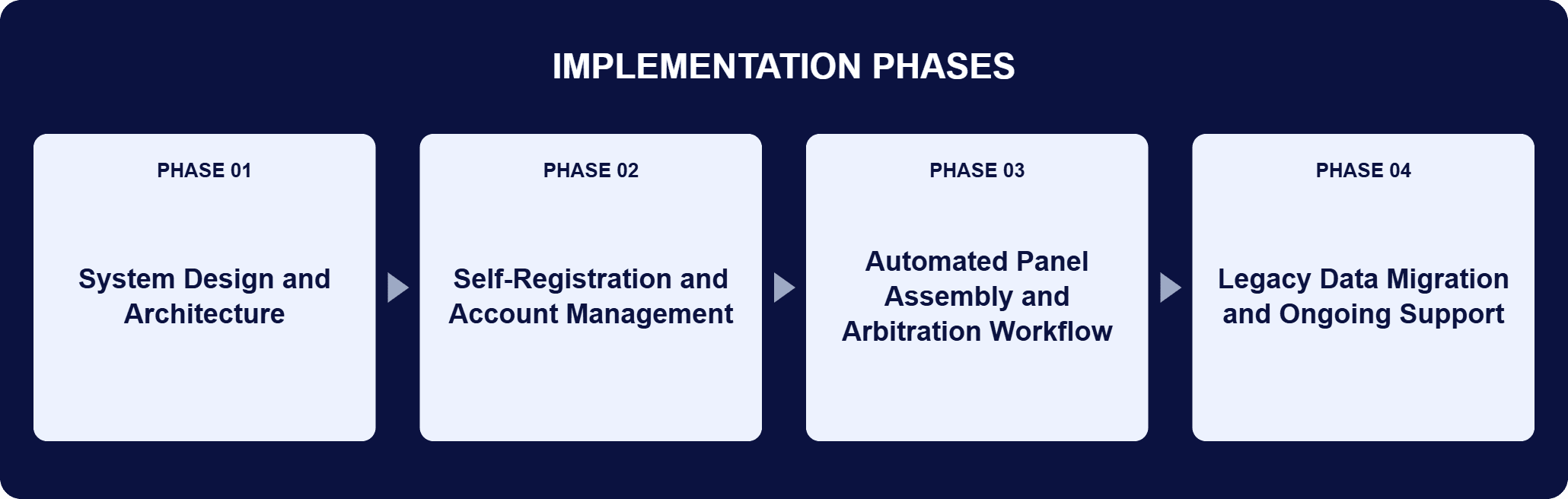
PHASE 03
Automated Panel Assembly and Arbitration Workflow
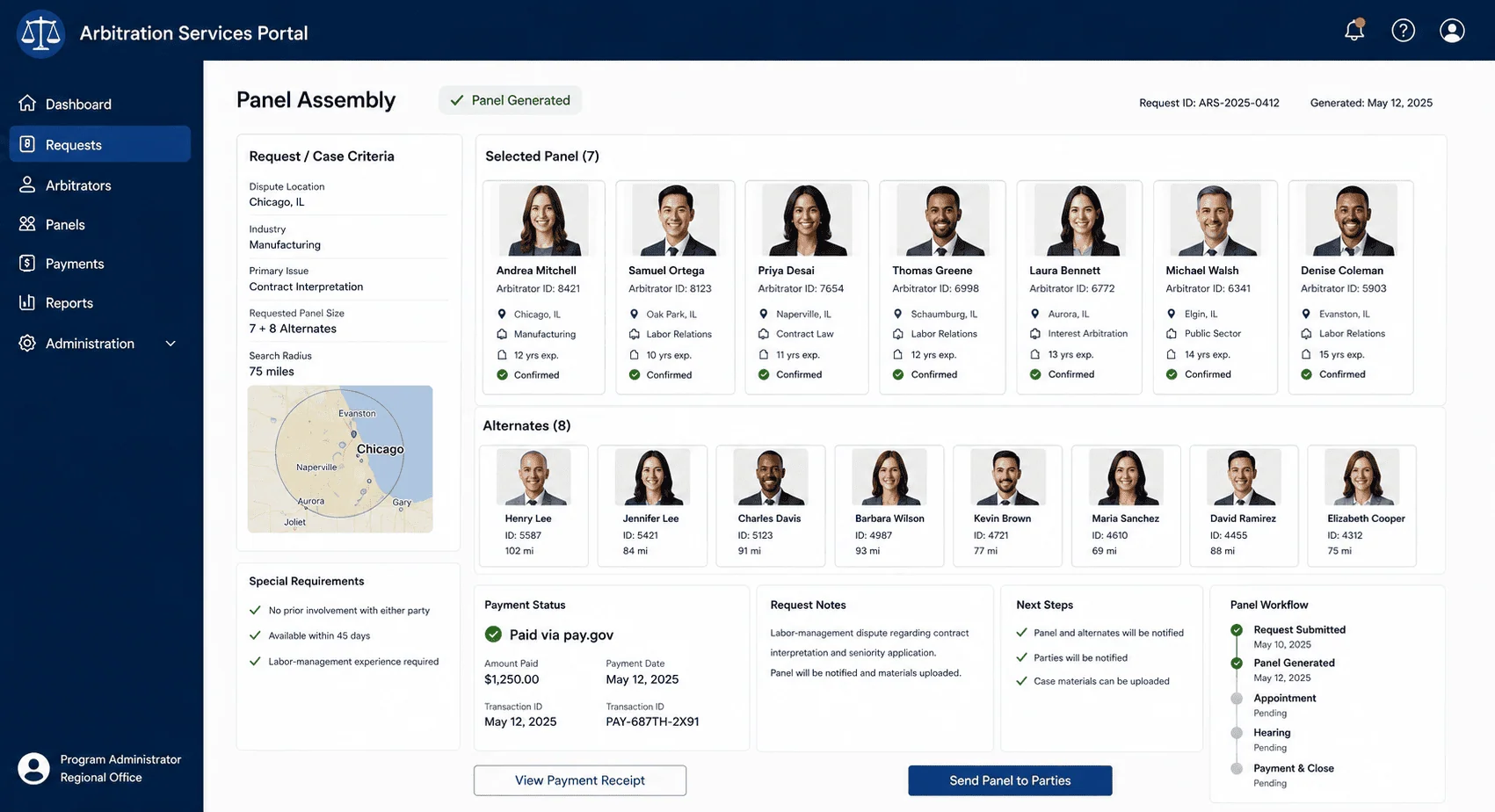
Once a request is submitted and payment is processed, the system automatically generates a randomized list of arbitrators based on geographic proximity to the dispute site and compatibility with the criteria and special requirements. A panel is 7 arbitrators by default with 8 alternates, widening the geographic area on request when the pool runs short. Biographical sketches are consolidated into a PDF and emailed to the employer and union representatives, the appointed arbitrator is notified automatically, and the arbitrator’s report and fee statement are processed by the system.
PHASE 04
Legacy Data Migration and Ongoing Support
i3solutions migrated user accounts, case histories, and documents off the legacy arbitration system through comprehensive planning, data cleansing, mapping, and validation, mitigating potential disruptions or data loss and keeping historical data accessible. Post-launch, i3solutions continues to provide further enhancements and ongoing support.
The backend is ASP.NET with C#, handling secure and efficient data processing, user authentication, and the server-side functions behind every arbitration transaction. Microsoft SQL Server stores the data for arbitrators, requestors, and arbitration cases, with T-SQL carrying the complex queries and data manipulation the process requires, and Entity Framework providing object-relational mapping so data access stays efficient with reduced code. The interface is built with Bootstrap, HTML, and CSS for a responsive design that works across devices and screen sizes; jQuery and JavaScript make the application interactive and responsive to user actions; AJAX updates parts of a page without reloading the whole page; and Telerik components add advanced interface elements such as grids and charts. SQL Server Reporting Services generates the operational reports: panels, biographical sketches, arbitrator selections, payments, and case statuses. Microsoft Word and ActivePDF generate and convert the documents the process runs on, from arbitrator biographies to arbitration requests and reports. A pay.gov integration handles online payments securely, covering arbitrator fees and other financial transactions, and the whole system was written, tested, and debugged in Visual Studio.
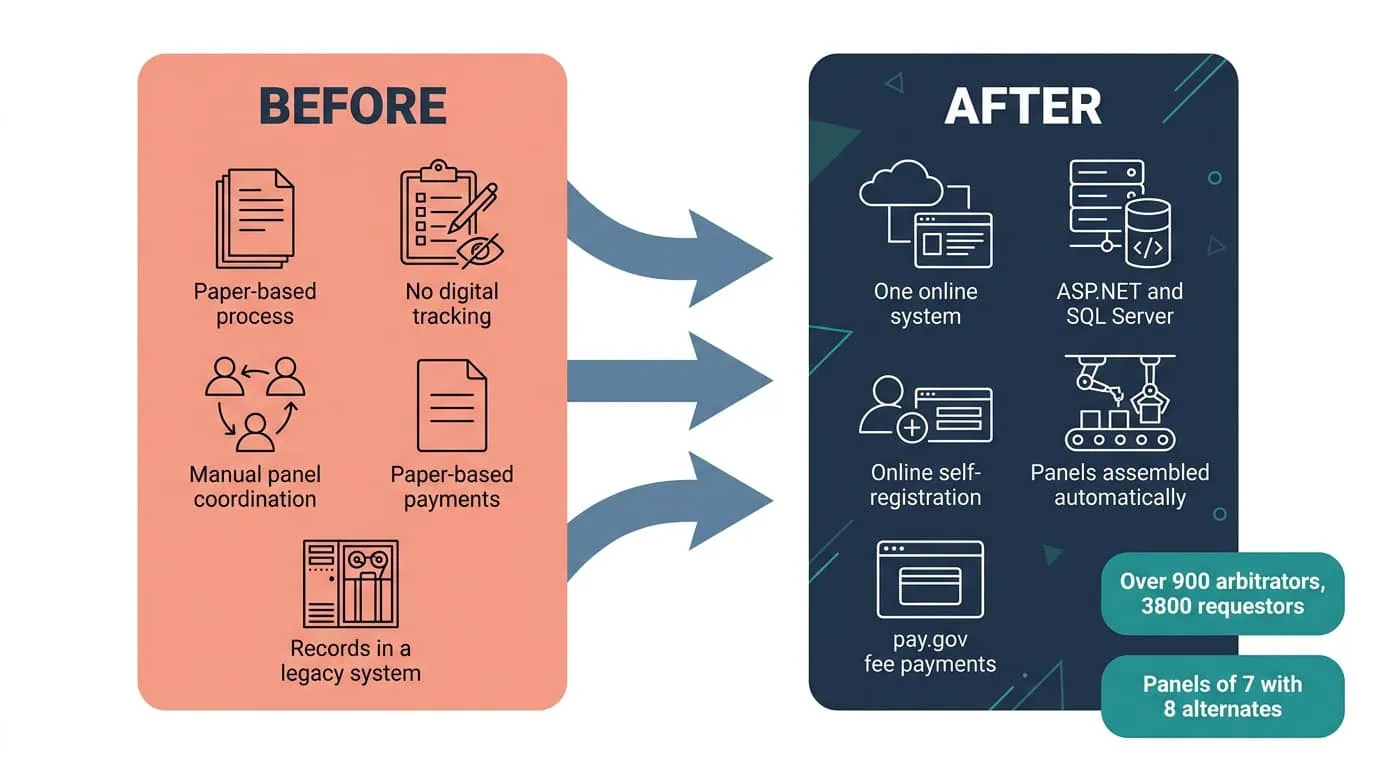
Panels Assembled Automatically
An ASP.NET system now randomizes arbitrator panels by geography and criteria and processes payments directly through pay.gov.
| Outcome | Before | After |
|---|---|---|
| Arbitration process | No digital process; antiquated paper-based approach | One online system for tracking, awarding, and compensating arbitrators |
| Panel assembly | Manual, paper-based coordination | Randomized panels of 7 arbitrators plus 8 alternates, matched to geography and criteria automatically |
| Registration and accounts | Paper-based approach with no self-service | Online self-registration and account management for over 900 arbitrators and 3800 requestors |
| Payments and fee processing | Paper-based compensation of arbitrators | pay.gov integration for fees; arbitrator reports and fee statements processed by the system |
| Historical records | Held in the legacy arbitration system | User accounts, case histories, and documents migrated with data cleansing, mapping, and validation |
The paper process is gone: tracking, awarding, and compensating arbitrators now run through one online system, eliminating the outdated paper processes and the time and resources they consumed. Flexibility and control moved to the people in the process: arbitrators and requestors self-register, manage their profiles, and handle arbitration requests online with greater autonomy and ease of use, and requestors can submit arbitration requests online instead of through the legacy system’s manual channel.
For the agency’s administrators, tracking and payments now live in one system: the agency can track arbitrators and manage payments in the same place, which reduces the administrative burden of that work and supports financial accuracy, with the pay.gov integration carrying the transactions and SQL Server Reporting Services reporting on panels, payments, and case statuses. One system now handles registration, panel assembly, appointment, reporting, and payment for the entire arbitration program, and post-launch, i3solutions continues to provide further enhancements and ongoing support.

PENDING-CLIENT-QUOTE
This engagement is relevant for
Less relevant for
A National Arbitration Program, Off Paper and onto One Online System
The engagement established that a paper-bound federal program of real scale can move onto one purpose-built online system without losing its history. A custom application on ASP.NET, C#, and Microsoft SQL Server now carries what paper carried: arbitrator registration and annual fees, requestor submissions, randomized panel assembly matched to geography and criteria, appointment notices, and the processing of arbitrator reports and fee statements, with payments through pay.gov and reporting through SQL Server Reporting Services.
Arbitrators and requestors manage their own accounts and requests online, and administrators track arbitrators and manage payments in the same system. The legacy system’s user accounts, case histories, and documents made the transition intact, and i3solutions continues to provide enhancements and ongoing support post-launch.
An online arbitration management system is a purpose-built web application that carries an arbitration program’s full lifecycle: registration, panel assembly, appointment, reporting, and payment. The system i3solutions built for this independent federal agency serves over 900 arbitrators, 3800 requestors, and more than 10 administrators, replacing a paper-based approach that had no digital process for tracking, awarding, or compensating arbitrators. Arbitrators apply online for agency review and approval, then manage their own profiles and fees. Requestors, typically representing an employer or a union, submit arbitration requests carrying the dispute location, issue, panel criteria, and any special requirements. The system assembles randomized arbitrator panels automatically, emails consolidated biographical sketches to both parties, notifies the appointed arbitrator, and processes the arbitrator’s report and fee statement once the arbitration is complete.
The goal in this engagement was set explicitly: simplify, enhance, and automate the arbitration process while giving arbitrators and requestors greater flexibility and control. i3solutions designed the system around self-registration, account management, and auto-assignment, so the steps that consumed administrative effort on paper run as workflow automation instead: panel generation, biographical sketch PDFs, appointment notices, and report and fee statement processing all happen in the system. The build sits on a proven Microsoft stack: ASP.NET and C# over SQL Server with Entity Framework, Bootstrap, jQuery, and Telerik components, plus a pay.gov integration for secure payments. The path off the old system was treated with the same rigor: planning, data cleansing, mapping, and validation moved user accounts, case histories, and documents without disruption, and i3solutions continues to provide enhancements and ongoing support post-launch.
Once a request is submitted and payment is processed, the system automatically generates a randomized list of arbitrators based on geographic proximity to the dispute site and compatibility with the specified panel criteria and any special requirements. By default a panel consists of 7 arbitrators, with an additional 8 selected as alternates, and special requests can include more. The system builds a pool of available arbitrators by comparing the request’s details with the arbitrator information entered into the system, then randomly selects the panel from that pool. If it cannot provide enough arbitrators to fill a request, the requestor is asked whether to increase the geographical area until the system can provide a full panel. A digital biographical sketch for each panel arbitrator, covering background, qualifications, experience, and fees, is consolidated into a PDF and automatically emailed to the employer and union representatives for review.
Arbitrators submit an online application for review and approval by the agency. Once accepted, they pay an annual fee, with the option to add up to 3 additional addresses. From there the account is self-service: arbitrators update their personal profile information, education, certifications, affiliations, experience, associations, published cases, fees, policies, availability, geographic restrictions, and issue and industry experience. Payments run through the system’s pay.gov integration, which handles online payments securely for arbitrator fees and other financial transactions. On the case side, once both parties inform the agency of their selected arbitrator and the appointment is made, the system automatically emails the arbitrator an appointment notice; when the arbitration is complete, the arbitrator’s report and fee statement are processed by the system, and administrators track and manage those payments in the same place.
They were migrated, and the migration was planned as part of the solution from the start rather than handled as an afterthought. i3solutions’ process encompassed planning, data cleansing, mapping, and validation, designed to mitigate potential disruptions or data loss while transferring user accounts, case histories, and documents into the new platform. Data integrity and consistency were requirements of the transfer, not hopes for it: records were cleansed and mapped before they moved, then validated after. The result was a transition in which historical data and insights remained accessible and preserved for continued use and reference, so the agency kept its institutional record of past arbitrations while gaining a digital process going forward. Post-launch, i3solutions continues to provide further enhancements and ongoing support to the arbitration system.
i3solutions is a Microsoft Partner with 30 years of delivery experience and 1,500+ Microsoft engagements, with every engagement staffed by an all-senior, all US-based delivery team. That profile matters for federal work, where the system must arrive secure and complete for user populations that cannot be beta testers: this one serves over 900 arbitrators and 3800 requestors. The engagement shows the full span of the practice: custom application development on ASP.NET, C#, and SQL Server; workflow automation across registration, panel assembly, appointment, and fee processing; a pay.gov payment integration; a legacy migration that preserved user accounts, case histories, and documents; and enhancements and support that continue post-launch. For agencies weighing this class of modernization, a short scoping conversation establishes what a purpose-built system would take in your environment.
Yes. This system serves roughly 900 arbitrators and 3,800 requestors with self-registration and online account management, replacing a process that had been entirely paper-based. The ASP.NET platform automates panel assembly by geography and criteria and processes payments directly through pay.gov, and legacy accounts, case histories, and documents were migrated in rather than left behind, so the scale the program already operates at didn’t have to shrink to fit the new system.
Both sides of this program now manage their own accounts and requests online, which is what took the manual load off administrators. We can talk through what a comparable self-service model would look like for your program.

US-Based | Est. 1997
© i3solutions. All rights reserved.
US-Based | Est. 1997
© i3solutions. All rights reserved.


