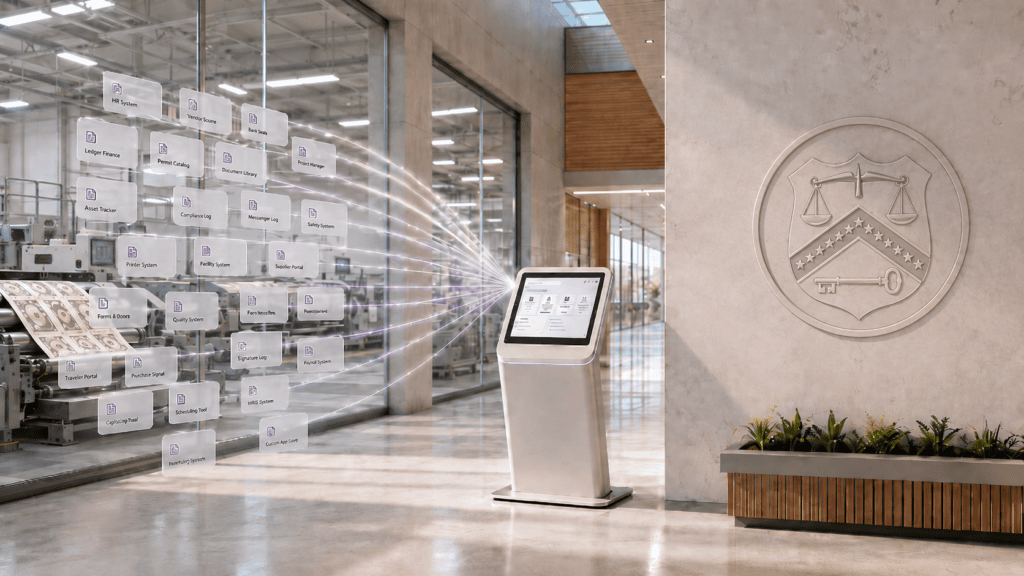
Application and legacy modernization is no longer a technical upgrade exercise. At enterprise scale, it determines how fast the organization can adapt, how securely it can operate, and how much risk it carries forward into future platforms.
i3solutions modernizes enterprise applications as a governed capability – aligning modernization programs to operating models, Microsoft environments, and long-term architecture so transformation reduces risk instead of redistributing it.
Modernization programs succeed when decisions are sequenced, governed, and aligned to operating realities – not driven by isolated rebuilds. Review your legacy landscape, modernization constraints, and platform direction to define a defensible path forward across Microsoft environments.
Legacy systems don’t just slow delivery. At enterprise scale, they shape how risk accumulates, how change is executed, and how reliably the organization can operate. As application portfolios expand and technical debt compounds, even minor changes introduce outsized effort, cascading dependencies, and growing exposure.
When modernization is approached tactically, organizations often move systems without resolving the structural issues underneath. Technical debt persists, fragmentation increases, and enterprise risk is redistributed rather than reduced.
A governed modernization approach changes this dynamic. Modernization decisions are aligned to operating models, enterprise architecture, and long-term platform direction. This restores control, reduces systemic risk, and allows change to scale without destabilizing core operations.

Enterprise application environments rarely collapse overnight. They degrade gradually as systems age, point solutions accumulate, and integrations are added without architectural ownership. Over time, technical debt compounds, change slows, and operational risk quietly increases.
The difference between “before” and “after” is not newer applications. It is whether modernization is treated as enterprise infrastructure.
In this state, systems technically run, but the enterprise cannot safely evolve.
The enterprise shifts from fragile legacy dependence to a governed modernization foundation. Leadership gains control. Teams gain velocity. The organization gains the ability to change without compounding risk.
If aging applications, fragile integrations, and accumulated technical debt are slowing delivery, increasing audit exposure, or blocking modernization initiatives, it’s time to step back and evaluate the role your legacy environment is playing in enterprise performance.
Enterprise modernization isn’t about replacing systems. It’s about restoring control, reducing systemic risk, and establishing a foundation that leadership can defend, scale, and govern.
Most modernization programs fail not because organizations lack technology, but because modernization is treated as a sequence of technical projects instead of an enterprise transformation discipline.
These patterns produce environments that look modern on the surface, but still operate as disconnected, high-risk systems underneath. Without enterprise alignment, modernization often increases complexity, expands attack surfaces, and creates new operational burdens. Instead of restoring control, organizations inherit a faster version of the same underlying problems.
This is why modernization must be structured, governed, and sequenced as an enterprise capability, not executed as a collection of upgrades.
Modernizing legacy systems is a strategic capability, not a one-size-fits-all project. Enterprises face multiple decision paths. Each is aligned with broader business objectives and governed to manage risk, cost, and impact.
A governed approach to modernization ensures each path aligns with enterprise priorities, reduces technical debt, and creates resilient, scalable systems. When structured with clear ownership and controls, these decision paths translate modernization into measurable outcomes – faster delivery, lower risk, and systems that can evolve with the business.
Modernization choices only deliver value when they are sequenced, governed, and aligned to enterprise priorities. Before committing to rehosting, refactoring, or replacement, it’s critical to understand where modernization will reduce risk, unlock capacity, and support long-term architectural direction.
Enterprise modernization is not a single project type. It is a coordinated set of capabilities that span applications, data, infrastructure, integration, and governance. i3solutions delivers modernization as an enterprise-scale solution set designed to reduce technical risk, increase delivery agility, and create a durable foundation for ongoing change.
Our modernization solutions support organizations across the full legacy-to-modern spectrum, enabling controlled evolution rather than disruptive replacement.
Core modernization capabilities include:
Together, these capabilities allow organizations to modernize selectively, sequence change intelligently, and build an application landscape that supports scale, integration, and long-term enterprise resilience.
Effective application modernization is about making the right changes, in the right order, with minimal disruption. Our methodology is designed to give CIOs, CTOs, and IT leaders clarity, control, and measurable outcomes at every stage. Supported by deep Microsoft consulting expertise, we modernize legacy environments in a way that aligns technology decisions with business priorities.
We start by gaining a complete, data-driven understanding of your current environment and future goals.
This step ensures modernization efforts are intentional, justified, and outcome-driven.
The i3 Risk and Roadmap Assessment ROI variant is a one-week structured engagement that produces a business case anchored on the specific environment, the specific compliance frameworks, and the specific executive-cycle timing.

With a strategy defined, we design architectures that are scalable and ready for the future.
The result is an architecture that supports growth, not one that needs replacing in a few years.
Execution is handled with precision to reduce risk and disruption.
This phased approach ensures modernization delivers value without business disruption.
Modern systems must operate as part of a connected ecosystem.
Integration and optimization ensure modernized applications work seamlessly across the enterprise to improve performance, cost efficiency, and visibility.
Governance is embedded, not bolted on.
Our Microsoft consulting-led approach ensures modernization is secure, compliant, and enterprise-grade.
Modernizing legacy systems is an enterprise capability that reshapes how risk is controlled, how change is executed, and how reliably the organization can scale. When modernization is governed and aligned to business objectives, it establishes a foundation that supports continuous transformation without destabilizing core operations.
What this solution enables:
Legacy systems evolve into flexible, high-performing platforms that support continuous improvement rather than periodic replacement. Application estates become easier to extend, integrate, and govern, reducing technical debt while increasing delivery velocity.
Modernized environments provide elastic, resilient foundations that support enterprise growth without infrastructure constraint. Capacity planning shifts from limitation management to performance optimization, enabling faster response to business, regulatory, and market change.
Modern application architectures support governed data flows, analytics readiness, and AI enablement. Information becomes accessible, reliable, and actionable across systems, allowing leadership to base decisions on integrated, real-time operational insight.
API-first integration models replace brittle point-to-point connections. Applications, data platforms, and business systems interoperate consistently across cloud, SaaS, and legacy environments, reducing fragmentation and enabling scalable platform strategies.
Modern development foundations shorten release cycles, reduce deployment risk, and enable incremental modernization. Enterprises gain the ability to modernize continuously without large-scale disruption or compounding technical debt.
Modern platforms lower long-term cost of ownership by retiring unsupported systems, consolidating redundant platforms, and reducing reliance on fragile maintenance cycles. Operational effort shifts from system upkeep to strategic delivery.
Resilient architectures, embedded identity controls, and standardized governance reduce outage risk, audit exposure, and security gaps. Reliability and protection become structural characteristics of the environment rather than reactive measures.
Modern application environments scale with organizational growth, regulatory change, and shifting business models. Platforms remain extensible as new capabilities, partners, and operating structures are introduced.
Together, these outcomes establish a resilient, innovation-ready application foundation that allows enterprises to modernize continuously, operate with confidence, and evolve without destabilizing the business.
Start with a senior-led Microsoft Modernization Assessment that produces a clear, actionable roadmap for modernizing your applications, data, and platforms.
Every engagement is paid, scoped, and designed to give leadership clarity, risk visibility, and a sequenced path forward.
What this first step delivers:
These modernization solutions are designed for enterprises operating complex, business-critical technology environments where legacy systems directly impact performance, risk posture, and strategic execution.
They are built for organizations managing large application portfolios, multi-platform ecosystems, regulatory obligations, and long-term modernization programs where decisions must be defensible, sequenced, and aligned to enterprise architecture standards.


Modernizing legacy systems at enterprise scale involves complexity, interdependencies, and high stakes. Without a structured, governed approach, your initiatives can face delays, cost overruns, and operational disruptions. Our solutions are designed to mitigate these risks while ensuring predictable, high-impact outcomes.
Key mechanisms for reducing delivery risk:
Embedding governance, visibility, and structured execution into enterprise modernization helps reduce delivery risk while enabling speed, resilience, and sustainable innovation. You can confidently modernize at scale, knowing your IT investments can deliver better business results.
Modernization succeeds when strategy, execution, and your business goal are tightly aligned. i3solutions brings end-to-end modernization expertise across applications, cloud, and data, ensuring no part of your technology stack is treated in isolation. From application refactoring and cloud migration to data platform modernization and system integration, our teams design solutions that scale with your business. This holistic capability is what sets us apart as a top software development company, trusted by organizations looking to modernize with confidence.
Our approach is built on a proven, risk-aware methodology that prioritizes continuity and measurable results. We modernize incrementally where possible, minimizing disruption to critical operations while delivering value early and often. With deep experience across regulated industries, we embed security, governance, and compliance into every phase of the modernization lifecycle. This will help you meet industry standards and regulatory requirements without slowing innovation.
i3solutions also believes modernization works best as a partnership, not a transaction. We offer flexible engagement models tailored to your needs, whether you require end-to-end delivery, targeted expertise, or co-innovation alongside your internal teams. Working collaboratively, we can help your organization build internal capability while accelerating outcomes. The result is not just modern systems, but a solid IT foundation that empowers your teams to innovate smarter and stay ahead of change.
Real-world case studies and expert perspectives showing how organizations operationalize Microsoft platforms with governance, scale, and confidence.
30+ separate legacy systems sat behind the intranet, the front door to information for the whole workforce. i3solutions consolidated them into one centralized SharePoint portal, so employees reach everything through a single access point, at a desk or a kiosk.
A costly third-party service managed vehicle inventory and search, with downtime it didn't control. i3solutions built an in-house Microsoft .NET and SQL Server application giving every location real-time inventory, eliminating the recurring vendor fees.
ROI is measured across multiple dimensions, including cost reduction, productivity gains, risk mitigation, and revenue enablement. We help organizations define clear success metrics early, such as reduced infrastructure spend, faster release cycles, or improved user adoption, and track progress throughout the engagement. This ensures modernization investments are directly tied to getting the business outcome that you want.
The timeline depends on the size, complexity, and approach selected for modernization. Some initiatives deliver value in weeks through targeted upgrades, while broader transformations may span several months. Our phased delivery model ensures progress is visible early, even in long-term programs.
Modernization often introduces new tools, platforms, and ways of working, which can require upskilling. We work closely with internal teams to ensure knowledge transfer is built into the engagement, minimizing dependency on external resources. The goal is to leave your teams confident, capable, and empowered to manage modern systems independently.
Data migration is handled with careful planning, validation, and testing to ensure accuracy and continuity. We assess data quality upfront, clean and structure data where necessary, and validate results before systems go live. This approach reduces the risk of data loss or inconsistencies during the transition.
Yes, modernization should be flexible, not rigid. Our modular and phased approach allows initiatives to be paused, reprioritized, or adjusted as business needs evolve. This ensures your organization remains in control, even in dynamic or uncertain environments.
Clear communication and governance are critical to success. We establish regular checkpoints, executive reporting, and stakeholder reviews to maintain alignment across IT and business teams. This transparency ensures expectations are managed and decisions are made collaboratively at every stage.

US-Based | Est. 1997
© i3solutions. All rights reserved.
US-Based | Est. 1997
© i3solutions. All rights reserved.